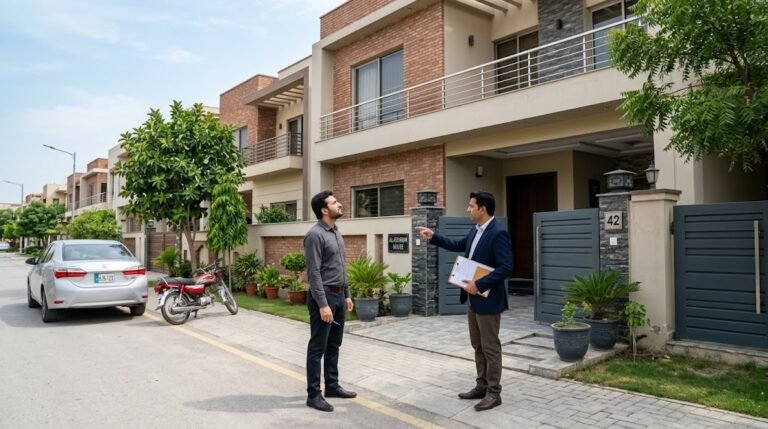
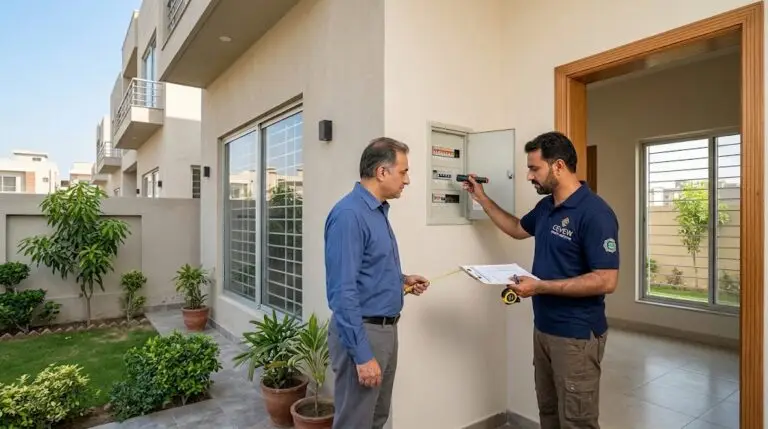
How to Check Property Ownership in Rawalpindi
Rawalpindi's property market covers CDA-adjacent sectors, RDA-approved schemes, private housing societies and revenue land. This guide explains the Fard Malkiat, the mutation record, the RDA verification route and the society-level checks that confirm who really owns a property.
Why Ownership Verification in Rawalpindi Is Different
Rawalpindi is not one property market. It is a mix of CDA-adjacent sectors, RDA-approved schemes, large private housing societies like Bahria Town, DHA and Askari, and revenue land spread across multiple tehsils.
Each of these follows a different record system. A property inside a housing society is verified through the society's transfer file and NOC, while revenue land is verified through the Fard Malkiat and the mutation record at the tehsil office.
This guide walks through each route, so you know exactly which records to check for the type of property you are buying.
- RDA Records
- Fard Malkiat
- Mutation Chain
- Society NOC
- Sub-Registrar Deed
- E-Stamp Verification
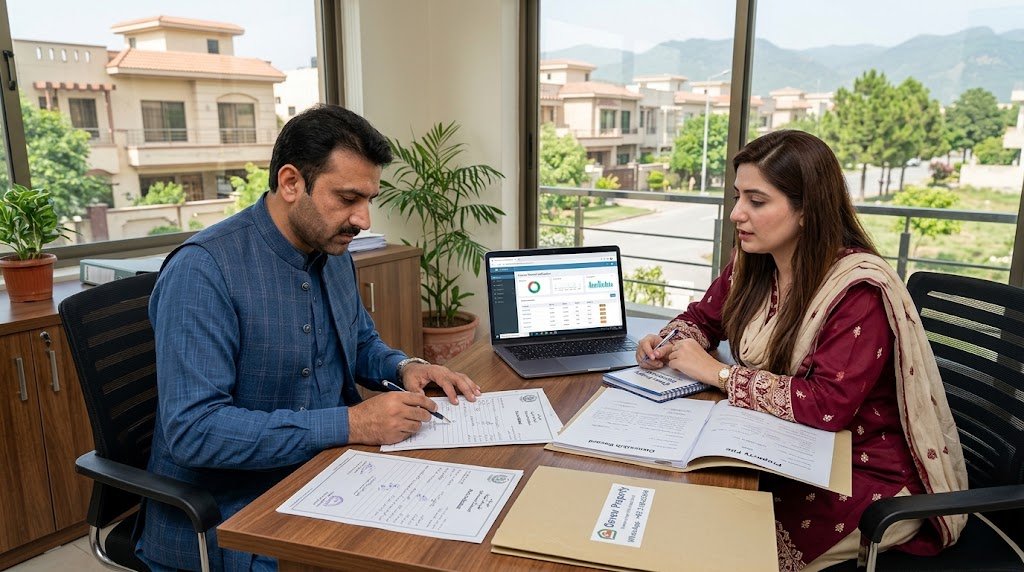
How to Check Property Ownership in Rawalpindi
The right method depends on whether the property sits inside a private housing society, an RDA-approved scheme, or revenue land outside the schemes.
RDA Verification
Authority RecordsThe Rawalpindi Development Authority approves and regulates private housing schemes across the district. Checking the scheme's approval status with RDA confirms whether the layout plan was sanctioned and whether the scheme is legally permitted to sell plots.
- Scheme approval and layout plan status
- NOC status for the development
- Any restriction on transfer
- Complaints or disputes on record
Fard Malkiat
Revenue RecordThe Fard Malkiat is the revenue record showing the current registered owner, plot area and the Khewat, Khasra and Khatooni numbers. For Rawalpindi revenue land, it should be obtained fresh from the relevant tehsil office or the Punjab land record system.
- Shows current owner name and share
- Includes Khasra and Khewat numbers
- Obtained from the relevant tehsil office
- Valid for approximately one month
Mutation Record (Intiqal)
Transfer HistoryThe mutation entry records how ownership transferred from one person to another. Reviewing the sequence of mutations in the tehsil register establishes the chain of title and exposes gaps, pending entries or cancelled transfers.
- Shows the chain of ownership
- Reveals pending or cancelled entries
- Available at the tehsil office
- Cross-check with the sale deed
Society NOC & Transfer File
Housing SocietyFor properties inside Bahria Town, DHA, Askari, Gulraiz and similar societies, ownership is tracked through the society's own records. Confirm membership, transfer permission and dues clearance directly with the society office.
- Membership record in seller's name
- NOC confirming transfer permission
- Clearance of society dues
- No dispute with the developer
Registered Sale Deed
Sub-RegistrarThe registered sale deed is the legal record of ownership transfer. It should be verified at the sub-registrar office where it was registered, and the seller's name should match the CNIC and the revenue or society record.
- Registered, not only notarised
- Seller's name matches CNIC
- Correct plot and area details
- Signatures and witnesses intact
E-Stamp Verification
Digital StampPunjab has replaced traditional stamp papers with a digital e-stamping system. E-stamp papers can be generated online and each transaction is recorded under a unique reference number, allowing instant verification through the official portal.
- Generate online or at bank branches
- Unique reference number per transaction
- Verify instantly via the portal
- Eliminates counterfeit stamps
What You Can Do Right Now
These are the practical actions that confirm ownership before you commit any money.
Check RDA Scheme Status
Confirm the housing scheme's approval and NOC status with the Rawalpindi Development Authority.
Ask for HelpObtain a Fresh Fard
Request the Fard Malkiat from the tehsil office or the Punjab land record portal to confirm the owner.
Get a FardTrace the Mutation Chain
Review the intiqal record at the tehsil office to confirm the chain of ownership has no gaps.
Trace the ChainConfirm Society Clearance
Ensure society dues, development charges and utility bills are cleared before transfer proceeds.
Confirm ClearanceVerification Methods at a Glance
A practical reference table showing each verification method, what it confirms, and where to check it.
| Method | What It Confirms | Where to Check | Ask |
|---|---|---|---|
| RDA Approval Scheme Status | Whether the housing scheme is approved and permitted to sell plots. | Rawalpindi Development Authority (RDA). | |
| Fard Malkiat Revenue Record | The current registered owner, plot area, Khewat and Khasra numbers. | Relevant tehsil office or the Punjab land record portal. | |
| Mutation (Intiqal) Title Chain | How ownership transferred over time, and whether the chain has gaps. | Tehsil office mutation register. | |
| Society NOC Transfer Permission | That the society permits the transfer and there is no dispute on record. | Housing society office (Bahria, DHA, Askari, etc.). | |
| Sale Deed Registered Transfer | That the transfer of ownership was registered with the sub-registrar. | Sub-registrar office where the deed was registered. | |
| E-Stamp Digital Stamp | Authenticity of the stamp paper used in the transfer or agreement. | Official Punjab e-stamping portal or bank branch. | |
| Approved Plan Construction | That the building was sanctioned and matches the approved drawings. | RDA, TMA or the relevant development authority. | |
| Utility & Tax Dues Clearance | That property tax, gas and electricity bills are fully settled. | Society office, tax authority and utility providers. |
Want Your Property Ownership Checked?
Send the property details and the documents you have. You will get clear guidance on what still needs to be verified — and what looks out of order — before you commit any money.
Share the Property Details
Location, plot number, size and the society, scheme or tehsil it falls under.
Send DetailsSend the Documents
Share clear photos of the deed, Fard, mutation entry and any NOC available.
Send DocumentsConfirm Your Timeline
Tell us when you plan to pay the token or final amount, so checks are done in time.
Discuss TimelineRed Flags in Ownership Records
If any of these appear, pause the transaction and get the ownership record independently verified before paying anything.
Name Mismatch Across Records
If the name on the deed, the Fard, the society file and the seller's CNIC do not match, that discrepancy must be resolved at source.
Gaps in the Mutation Chain
A missing mutation entry or a chain that does not connect properly can indicate that ownership was never legally transferred.
Scheme Not RDA-Approved
A housing scheme that is not approved by RDA, or whose layout plan was never sanctioned, is a serious ownership and legal risk.
Photocopies Only
If you are only shown photocopies and never originals, or the seller cannot produce the Fard or society file, that is a major concern.
Unpaid Dues "To Be Sorted Later"
Any promise that dues will be cleared after the sale usually means they become the buyer's responsibility. Insist on written clearance.
Seller Is Not the Recorded Owner
A relative, agent or "authorised representative" selling on behalf of someone else needs a properly executed power of attorney — verified.
How to Check Ownership in Four Steps
A practical sequence you can follow for any property in Rawalpindi.
Identify the Property Type
Confirm whether it is revenue land, an RDA-approved scheme, or a private housing society.
Obtain the Primary Record
Get the Fard Malkiat for revenue land, or the society file and NOC for a housing society.
Trace the Mutation or Transfer File
Review the chain of ownership at the tehsil office or through the society's transfer history.
Confirm Dues and Clearance
Ensure all outstanding dues, charges and restrictions are cleared before transfer proceeds.
Ownership Verification Checklist
- Property type identified — revenue land, RDA scheme or housing society.
- RDA approval and NOC status confirmed for the scheme.
- Fard Malkiat obtained fresh from the relevant tehsil office or online portal.
- Seller's name matches across the deed, Fard, society file and CNIC.
- Mutation chain traced with no gaps or pending entries.
- Society membership record and transfer permission confirmed in writing.
- No-encumbrance status confirmed — no mortgage or court attachment.
- Approved building plan verified for a constructed house.
- Property tax, gas, electricity and society dues cleared with receipts.
- Payment made only against registered transfer — never on a hand receipt.
Frequently Asked Questions
Common questions buyers ask about checking property ownership in Rawalpindi.
How do I check property ownership in Rawalpindi?
It depends on the property type. For revenue land, obtain a fresh Fard Malkiat from the relevant tehsil office and trace the mutation chain. For properties inside a housing society such as Bahria Town, DHA or Askari, confirm the membership record, transfer permission and dues clearance with the society office. For schemes, verify the RDA approval and NOC status. In all cases, verify the registered sale deed at the sub-registrar office where it was registered.
Can I check property ownership online in Rawalpindi?
Punjab has digitised its land record system, and Fard Malkiat can be obtained through the provincial land record portal for many areas. Housing societies like Bahria Town and DHA also offer online portals where members can check the status of their file. RDA maintains records on approved schemes. For critical verification, the original documents should still be confirmed at the relevant office rather than relying only on screenshots.
What is the difference between RDA and society records?
RDA approves and regulates private housing schemes at the district level, and its records show whether a scheme's layout plan is sanctioned and whether it has permission to sell plots. The society's own records track individual ownership, membership and transfer within that scheme. Both need to be checked: RDA confirms the scheme is legal, the society confirms who actually owns the specific plot.
What is a Fard Malkiat and why is it important?
The Fard Malkiat is the government revenue record that shows the current registered owner of the land, along with the Khewat, Khasra and Khatooni numbers. It is the closest thing to an official ownership snapshot for revenue land. It should be obtained fresh — ideally within the last 30 days — directly from the tehsil office or the Punjab land record portal, rather than accepted as a photocopy from the seller.
What is a No Objection Certificate (NOC) in a housing society?
A society NOC confirms that the society permits the transfer of a specific plot from one member to another. It is usually issued after confirming that dues are cleared, that the membership record is in order, and that there is no dispute on the file. Without an NOC, the society may refuse to update the membership record after the sale — leaving the buyer without legal recognition inside the scheme.
Can I get a Property Information Report in Rawalpindi?
For properties inside CDA-administered areas, CDA issues a Property Information Report (PIR) at its One Window Counter. For Rawalpindi-specific properties, buyers should check with RDA, the relevant housing society, or the tehsil office where the property is recorded. The most useful document in all cases is the current Fard, the society file and a valid NOC.
What is e-stamping and how does it help verify ownership?
Punjab has replaced traditional stamp papers with a digital e-stamping system. E-stamp papers are generated through the official portal or designated bank branches, and each transaction is recorded under a unique reference number. This allows instant verification through the portal, eliminates counterfeit stamp papers, and supports the verification of property documents in real time.
How can I get help checking property ownership?
You can reach out directly on WhatsApp at +92 310 940 5049. Share the property location, plot details and clear photos of the documents you have, and you will get guidance on what still needs to be verified before you commit to any payment.
Check Ownership Before You Pay
Send the property details and the documents you have. You will get clear guidance on what still needs to be verified — and what looks out of order — before you commit any money.
How to Check Property Ownership in Rawalpindi — Complete Guide
Rawalpindi's property market is more layered than it first appears. It combines revenue land spread across multiple tehsils, RDA-approved housing schemes, large private societies such as Bahria Town, DHA and Askari, and CDA-adjacent sectors. Each of these follows a different record system, and the verification route changes depending on where the property actually sits.
RDA and the housing scheme route
The Rawalpindi Development Authority approves and regulates private housing schemes in the district. Its records show whether a scheme's layout plan was sanctioned, whether it has permission to sell plots, and whether any complaint or dispute is pending against it. For any property inside a private scheme, the first question to ask is whether the scheme itself is RDA-approved. A scheme that is not approved, or whose layout plan was never sanctioned, carries a fundamental ownership and legal risk regardless of what individual documents show.
The Fard Malkiat and revenue records
For revenue land outside housing schemes, the Fard Malkiat is the primary record of ownership. It shows the current registered owner, the plot area, and the Khewat, Khasra and Khatooni reference numbers. It should be obtained fresh — ideally within the preceding thirty days — directly from the relevant tehsil office or through the Punjab land record portal. Accepting a photocopy from the seller is not verification. The name on the Fard should match the seller's CNIC and the registered sale deed. If it does not, that discrepancy must be resolved at the source before the transaction proceeds.
Mutation entries and the chain of title
A mutation entry, or intiqal, records the transfer of ownership in the revenue record. Reviewing the sequence of mutations establishes the chain of title — how the property moved from one owner to the next over the years. Gaps in this chain, mutations that do not correspond to any registered deed, or entries that were cancelled or are under challenge before a revenue officer are all indicators that the title may not be clean.
Society records and NOC for Bahria Town, DHA and Askari
Inside a private housing society, ownership is tracked through the society's own records rather than the tehsil revenue system. The membership record should be in the seller's name, dues should be cleared, and an NOC confirming transfer permission should be issued by the society. Without an NOC, the society may refuse to update the membership record after the sale — leaving the buyer with physical possession but no legal recognition inside the scheme. This applies equally to Bahria Town, DHA, Askari, Gulraiz and other planned communities in and around Rawalpindi.
The registered sale deed and sub-registrar
The registered sale deed is the legal record of ownership transfer and should be verified at the sub-registrar office where it was registered. The seller's name should match the CNIC and the revenue or society record. A stamp paper agreement or a hand-written receipt is not the same as a registered transfer, and relying on it leaves the buyer exposed if a dispute arises later.
E-stamping and digital verification
Punjab has replaced traditional stamp papers with a digital e-stamping system. E-stamp papers are generated through the official portal or designated bank branches, and each transaction is recorded under a unique reference number. This allows instant verification through the portal, eliminates counterfeit stamp papers, and supports real-time verification of property documents.
How to decide between verification methods
The right verification route depends on the property type:
- Revenue land — obtain a fresh Fard Malkiat, trace the mutation chain at the tehsil office, and check for encumbrances.
- RDA-approved housing scheme — check RDA records for scheme approval and layout plan status.
- Private society (Bahria, DHA, Askari) — verify the society membership file, transfer permission and dues clearance directly with the society office.
- Constructed house — verify the approved building plan and completion certificate in addition to ownership records.
- Any property — verify the registered sale deed at the sub-registrar and confirm the e-stamp reference number.
For the Islamabad-side equivalent of this guide, see how to check property ownership in Islamabad. For a broader walkthrough of document verification across Pakistan, see how to verify property documents in Pakistan. For location guidance before you reach this stage, see the best areas to buy a house in Rawalpindi. Once a property is shortlisted, our guide on how to inspect a house before buying covers the physical checks, and hidden costs of buying property in Pakistan explains the charges to budget for.
Get help checking ownership
If you would rather not work through every check yourself, you can send the property details and document photos directly on WhatsApp at +92 310 940 5049. Include the location, plot number, size, the society, scheme or tehsil it falls under, and what documents you currently have. That is enough to identify what still needs verification and what should be clarified before any payment is made.