How to Find Houses for Sale in Rawalpindi
Finding a house in Rawalpindi takes more than browsing listings. A property that looks ideal in photographs may not suit your family's routine, may not be in the right location for your commute, and may come with ownership, documentation, or condition issues that only appear when you investigate properly.
The buyers who end up satisfied are usually the ones who approach houses for sale in Rawalpindi as a research process rather than a quick purchase. They define what they need, set a realistic budget, shortlist the right areas, compare properties on more than just price, and verify ownership and documents before committing any money.
This guide walks through that process step by step — from defining your requirements to understanding token and bayana, checking red flags, and following a safe buying sequence.
How Can You Find Houses for Sale in Rawalpindi?
A practical approach is to define your budget and requirements, identify suitable Rawalpindi areas, search property listings, contact sellers or dealers, shortlist houses, visit the properties, compare condition and location, and verify ownership and relevant documents before paying a token or advance amount.
Table of Contents
- Define Your Requirements
- Set a Realistic House-Buying Budget
- Choose the Right Area in Rawalpindi
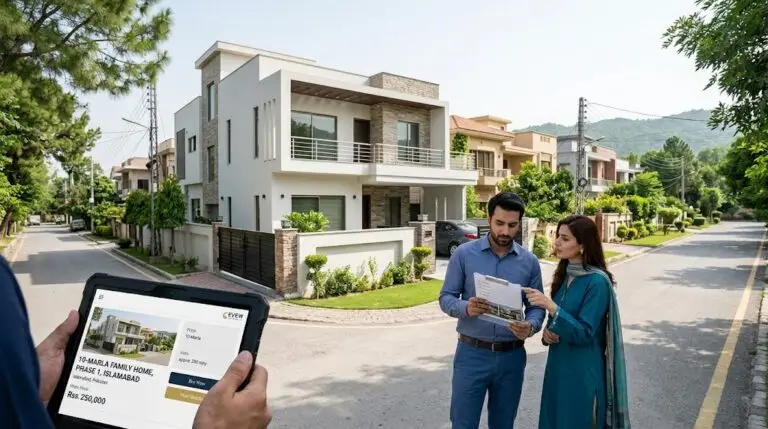
- Search Online Property Listings
- Contact Property Dealers and Sellers
- Shortlist Houses Before Visiting
- Visit the House in Person
- Check the Location and Surroundings
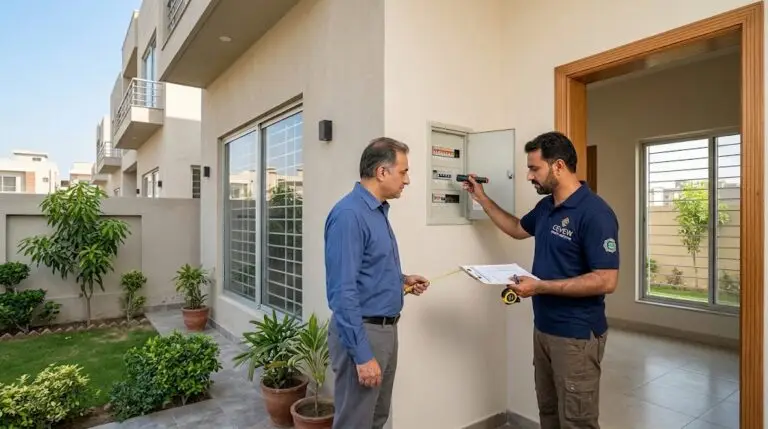
- Inspect the House Condition
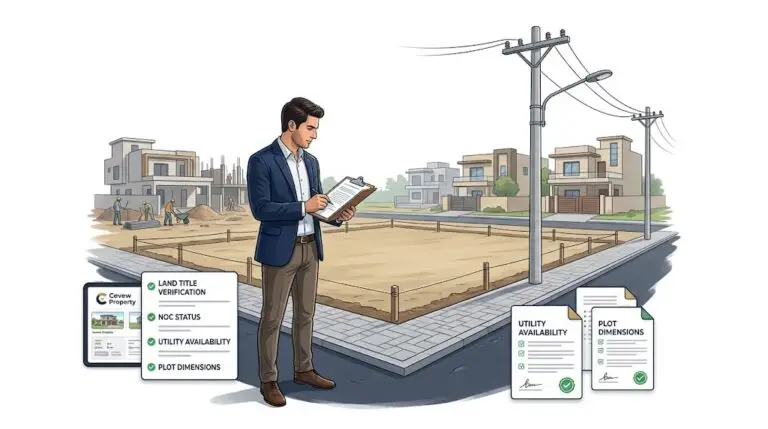
- Verify Property Ownership and Documents
- Check Utilities, Dues, and Other Costs
- Compare Asking Prices
- Understand Token and Bayana Before Paying
- Watch for Property Buying Red Flags
- Common Mistakes to Avoid
- House Buying Checklist
- How Cevew Property Can Help
- Frequently Asked Questions
- Final Buying Guidance
1. Define Your Requirements Before Searching
Most buyers waste time on unsuitable viewings because they start browsing before deciding what they actually need. A clear requirement list saves hours of site visits and prevents you from being swayed by a house that looks impressive but does not fit your life.
House Type
Decide which type of house fits your needs — a single-family house, a double-storey house, a portion, a corner house, a newly built property, or a used house. Each type comes with different trade-offs in terms of space, privacy, maintenance, and cost.
Size
Your preferred house size should reflect your family's needs and your budget. Consider the total plot size and the covered area, and think about how the space will work for your household over the coming years.
Bedrooms and Living Spaces
Think about the number of bedrooms, attached bathrooms, whether you need a guest room, a drawing room, and a separate living area. The right mix depends on your family size and how you use your home.
Requirement Checklist
- House type preference
- Preferred size (plot and covered area)
- Number of bedrooms
- Number of bathrooms
- Guest room requirement
- Drawing room / living area
- Parking space
- Kitchen size and layout
- Store room
- Lawn or open space
- Street width
- Electricity and gas availability
- Water supply and sewerage
- Internet availability
2. Set a Realistic House-Buying Budget
The purchase price is not the only cost of buying a house. Buyers who plan only for the price often find themselves stretched once the transaction moves forward.
Additional Costs to Consider
- Documentation costs
- Transfer-related charges
- Taxes or government charges where applicable
- Repair and renovation work
- Utility-related work
- Moving expenses
- Agent or dealer charges where applicable
- Contingency reserve
Fixed percentages vary depending on the transaction, the property, and the authority involved. Rather than relying on a figure you heard from someone, confirm the current applicable charges from the relevant authorities or a qualified professional.
Do not search only by the maximum amount you can technically afford. Keep room in your budget for transaction and repair-related expenses.
3. Choose the Right Area in Rawalpindi
Location affects almost every part of daily life — how long your commute takes, how easily your children get to school, how quickly help arrives in an emergency, and how much demand there will be if you ever sell or rent out the property.
Do not choose an area only because a house there is cheaper. Visit the area personally, at different times of day if possible, and see how it feels in normal conditions rather than just during a short viewing.
| Factor | What to Check |
|---|---|
| Access | Main roads and daily routes |
| Transport | Public and private transport options |
| Education | Nearby schools and educational facilities |
| Healthcare | Nearby hospitals and clinics |
| Shopping | Markets and daily-use stores |
| Utilities | Electricity, gas, water and sewerage |
| Environment | Noise, traffic and surrounding development |
| Security | Local security conditions |
| Construction | Overall neighbourhood development |
Not every Rawalpindi area offers the same facilities, and conditions can differ even between nearby streets. Evaluate the specific street and block you are considering rather than relying on a general area name.
4. Search Online Property Listings
Online listings can help you build an initial shortlist quickly. Instead of relying only on word of mouth, you can compare multiple properties, review photographs, and check basic details before deciding which ones are worth visiting.
What to Examine in a Listing
- Property photographs
- House size
- Location
- Number of rooms
- Asking price
- Contact information
- Listing date where available
- Property description
- Whether the listing appears complete and consistent
Treat online information as an initial source rather than a replacement for physical inspection and document verification. A listing tells you what a property is being offered as — not what it is.
You can start by browsing houses and properties available through Cevew Property. Use the listing details as a starting point, then verify everything independently before proceeding.
5. Contact Property Dealers and Sellers
During your search, you will likely come across property owners, property dealers, real-estate consultants, and property agencies. Each can play a useful role, but the buyer should still understand the underlying property and documents.
Questions to Ask Before Arranging a Visit
- Is the property still available?
- What is the asking price?
- What is the exact location?
- What is the house size?
- How old is the construction?
- Is the property occupied?
- Is possession available?
- Are there outstanding dues?
- Who is the legal owner?
- Are the relevant documents available for verification?
Avoid sending money merely because someone claims a property is available. Take the time to confirm details and, where possible, verify independently before any payment.
6. Shortlist Houses Before Visiting
A shortlist saves time and makes comparison easier. Before travelling to view properties, narrow your options based on a consistent set of criteria.
Shortlisting Criteria
- Budget fit
- Location suitability
- House size
- Construction condition
- Number of bedrooms and bathrooms
- Parking availability
- Street and access
- Utilities setup
- Documentation availability
- Seller or dealer responsiveness
Comparing several properties before making a decision is far safer than deciding after seeing only one house. A house that looks good in isolation may not look good next to a better option.
7. Visit the House in Person
A physical visit is the only way to judge how a house really is. Photographs cannot capture dampness, poor ventilation, the smell of an old drainage line, or the way the light falls inside a room on a normal day.
Exterior Checks
- Street condition
- Main entrance and gate
- Boundary wall
- Parking area
- Drainage arrangements
- Nearby construction activity
Interior Checks
- Walls and ceilings
- Floors
- Doors and windows
- Bathrooms and plumbing
- Kitchen condition
- Electrical fittings and wiring
- Natural light and ventilation
Condition Observations
Look carefully for signs of dampness, water stains, cracks, leakage, poor ventilation, damaged fittings, and recent patchwork. These are not always visible in photographs, and they can indicate larger underlying issues.
Visible issues do not automatically mean a property should be rejected. They should be identified, understood, and considered when evaluating the property — ideally with input from someone with construction knowledge.
8. Check the Location at Different Times
Where possible, visit the property more than once. Daytime and evening conditions can differ noticeably, and a street that seems quiet in the morning may be busy in the evening.
Things to Observe on a Second Visit
- Traffic conditions
- Noise levels
- Parking availability on the street
- Street activity
- Accessibility at different times
- Nearby construction
- Drainage and water conditions
- General surroundings
Speaking with nearby residents where appropriate can give useful context, without invading anyone's privacy.
9. Inspect the House Condition Carefully
Beyond the visible surfaces, a careful buyer will look for signs that suggest underlying issues. This is not about finding reasons to reject a property — it is about knowing what you are buying.
Condition Points to Examine
- Wall cracks and damp patches
- Ceiling stains and seepage
- Floor unevenness
- Door and window alignment
- Water pressure at taps and showers
- Bathroom drainage
- Kitchen plumbing and ventilation
- Electrical load and fittings
- Roof condition where accessible
- Signs of recent repairs
For a more detailed room-by-room approach, see our guide on how to inspect a house before buying.
10. Verify Property Ownership Before Paying
Ownership verification is one of the most important steps in the entire process. Price, location, and condition all become secondary if the person selling the property does not have a valid right to sell it.
Ownership Verification Points
- Ownership or title documents
- CNIC or identity information where appropriate
- Allotment or transfer documentation where applicable
- Registry or sale deed where applicable
- Mutation or record information where applicable
- Possession documentation where applicable
- Relevant authority or society records
Documentation requirements vary depending on the property's location, authority, housing society, and transaction type. No single document proves ownership for every property in Rawalpindi. For significant transactions, verification through the relevant authority and a qualified legal or property professional is a sensible step.
Do not rely only on photocopies, screenshots, verbal statements, or documents supplied without independent verification.
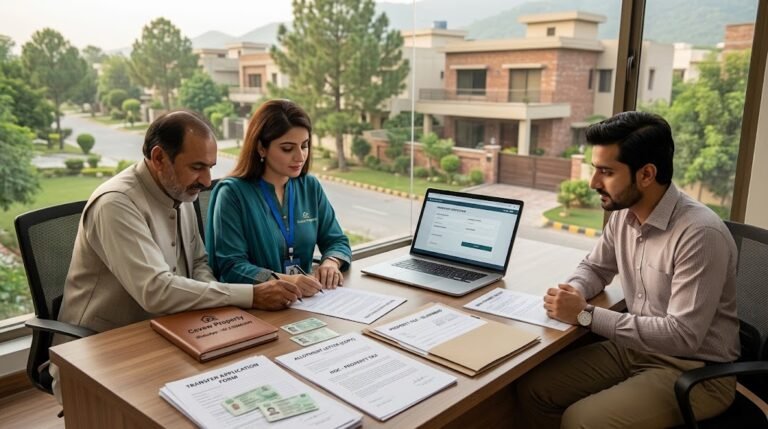
11. Check Property Documents Carefully
Once you know who owns the house, review the paperwork carefully. Compare information across documents — names, plot numbers, sizes, and dates should be consistent. Any mismatch is worth resolving before any payment.
Document Verification Checklist
- Seller identity
- Ownership evidence
- Property number and address
- Transfer history where relevant
- Sale deed or registry where applicable
- Mutation or relevant land record where applicable
- Allotment or transfer letter where applicable
- Possession documentation where applicable
- Society or authority records
- Utility-related information
- Outstanding dues
- Any available NOC or permission relevant to the property
12. Check Property Dues and Other Liabilities
Unpaid dues are one of the most common surprises in property purchases. They do not usually appear in the advertised price, and they can become a point of dispute once the transaction is underway.
Dues to Clarify
- Utility bills
- Society dues
- Property-related charges
- Taxes or government dues where applicable
- Maintenance charges
- Other liabilities connected with the property
Clarify who is responsible for any outstanding amount before completing the transaction. Get this in writing where possible.
13. Confirm Possession and Transfer Requirements
Possession and transfer are not the same thing. Possession means you have physical control of the property. Transfer means the property is officially recorded in your name.
Points to Confirm
- Whether possession is available
- Whether the property is occupied
- Whether the seller can legally transfer it
- What transfer process applies
- Which authority handles the transfer
- What documents are required
- Which charges apply
- Whether any approvals are needed
For a specific transaction, confirm the current procedure with the relevant authority or a qualified property or legal professional.
14. Compare the Asking Price With Similar Properties
Do not judge a house only by its asking price. Two houses with the same covered area can differ substantially in value because of location, condition, construction quality, and other factors.
Factors to Compare
- Area and house size
- Construction quality
- Age of the house
- Current condition
- Street and location within the area
- Parking availability
- Corner or main-road position
- Utilities setup
- Possession status
- Documentation status
- Nearby facilities
Online asking prices are not necessarily final transaction prices. They are a starting point for discussion, not a fixed figure.
15. Understand Token and Bayana Before Paying
A token is a payment made to demonstrate serious purchase intent. Bayana is a larger, more formal part-payment. Terminology and contractual arrangements can vary, so the meaning depends on what is written down.
Points to Clarify in Writing
- Written terms
- Refund conditions
- Forfeiture conditions
- Seller obligations
- Buyer obligations
- Property identification
- Agreed price
- Payment amount
- Date
- Signatures
- Receipt or evidence of payment
For a detailed explanation of what a token is and what to check before paying one, see our guide on what a property token is and what you should check before paying one.
16. Follow a Step-by-Step House Buying Process
A safe house purchase follows a clear sequence. Each step builds on the one before it, and skipping steps tends to create problems later.
Define Requirements
Decide on house type, size, bedrooms, and other essential features before searching.
Set Budget
Work out the total cost, including transaction charges, repairs, and a contingency reserve.
Select Suitable Rawalpindi Areas
Shortlist locations based on access, facilities, utilities, and your daily routine.
Search Property Listings
Use online listings and local contacts to build an initial shortlist of properties.
Shortlist Houses
Compare options on size, condition, location, and documentation before visiting.
Contact Owner or Dealer
Ask focused questions about availability, price, ownership, and documents.
Visit and Inspect
Walk through the property in person and check condition, access, and surroundings.
Compare Options
Compare shortlisted houses on a consistent set of criteria, not just price.
Verify Ownership and Documents
Confirm ownership and review relevant records through the appropriate authority or society.
Confirm Dues and Transfer Requirements
Check outstanding dues and understand the transfer procedure and applicable charges.
Agree on Written Terms
Put price, payment schedule, refund conditions, and obligations in writing.
Proceed With Payment and Transaction
Complete the transfer through the appropriate documented process and keep all records.
17. Property Buying Red Flags to Watch For
Not every warning sign means something is wrong. But unresolved issues deserve further verification before you commit — and a cluster of them is a strong signal to slow down.
One warning sign does not automatically prove fraud, but multiple unexplained inconsistencies should lead to additional verification before any money changes hands.
18. Common Mistakes Buyers Make
Most problems buyers encounter come from a small set of repeated mistakes. Knowing them in advance helps you avoid them.
19. Rawalpindi House Buying Checklist
Use this checklist as a final review through the entire process.
Before Searching
- Define budget
- Decide preferred house size
- Decide preferred location
- List essential features
Before Visiting
- Confirm asking price
- Confirm location
- Confirm availability
- Ask about ownership and documentation
- Ask about possession
During the Visit
- Inspect construction
- Check water and plumbing
- Check electrical condition
- Check ventilation
- Check parking
- Check street and access
- Check surroundings
Before Paying
- Verify ownership
- Check relevant records
- Confirm dues
- Confirm transfer requirements
- Understand token and bayana terms
- Get written evidence of payment
- Seek professional verification when needed
20. How Cevew Property Can Help You Find Property in Rawalpindi
Cevew Property is a platform for users to explore property opportunities in Islamabad and Rawalpindi, covering houses, flats, apartments, plots, and rental properties.
You can browse available listings and contact the relevant listing or dealer where information is provided. All property details should be independently verified before any purchase decision.
Related Property Guides
These guides cover topics that often come up during a house purchase.
Frequently Asked Questions About Houses for Sale in Rawalpindi
How can I find houses for sale in Rawalpindi?
Buyers can search online property listings, contact local property dealers and sellers, compare suitable listings, and visit shortlisted houses personally before making a decision. Treat listings as a starting point and verify important details independently.
What should I check before buying a house in Rawalpindi?
Check location, construction condition, utilities, ownership, relevant documents, possession, dues, transfer requirements, and transaction terms. Each of these affects both the value of the purchase and the ease of completing it.
How do I verify ownership of a house in Rawalpindi?
Ownership should be verified through the relevant property records, authority, society, or land-record system applicable to that particular property. Professional legal or property verification may be appropriate for complex transactions.
Should I visit a house before buying it?
Yes. Physical inspection helps buyers evaluate the actual condition, surroundings, access, utilities, parking, and other factors that may not be clear from photographs or online listings. For a detailed approach, see our guide on how to inspect a house before buying.
What documents should I check before buying a house?
Documentation varies by property type and authority, but buyers may need to verify ownership or title records, transfer or allotment documents, possession records, relevant authority records, identity information, and applicable dues. Confirm the exact requirements for your specific property.
Should I pay a token before verifying the property?
Buyers should understand the property's ownership, documentation, transaction terms, and refund or forfeiture conditions before making a payment. Written evidence and appropriate verification are strongly encouraged. See our guide on what a property token is for more detail.
How do I compare different houses for sale in Rawalpindi?
Compare location, size, condition, price, construction, utilities, parking, access, documentation, possession, and expected additional costs rather than focusing on asking price alone. A lower asking price does not always mean a better deal.
Final Buying Guidance
Finding the right house in Rawalpindi is a process, not a single decision. The buyers who end up satisfied are usually the ones who take the time to define what they need, compare options carefully, and verify ownership and documents before committing any money.
A house that looks right on the first visit may reveal issues later. A property that seems slightly more expensive may turn out to be the better overall choice once condition, dues, and documentation are considered. Comparing on total situation rather than headline price usually leads to a better decision.
Whether you are buying for personal use, for family, or as an investment, the same discipline applies: look carefully, verify properly, and document the process.
Looking for a House for Sale in Rawalpindi?
Explore available property listings, compare suitable options, and take the time to verify the property before making a purchase decision.
Want to List Your Property for Sale?
If you are a property owner looking to list a house or other property for sale in Islamabad or Rawalpindi, use the property listing option provided by Cevew Property.
Have More Property Buying Questions?
Explore Cevew Property's FAQs and educational articles for general information about buying, selling, renting, and understanding property transactions.
Property transactions can involve legal, financial, tax, and authority-specific requirements. This article provides general educational information and should not be treated as legal, tax, or financial advice. Before completing a transaction, verify the property's current records and requirements with the relevant authority and, where appropriate, a qualified professional.
About the Author

Ahmad Ali
Ahmad Ali is a web developer, SEO specialist, and content creator associated with Cevew Property. He writes practical property and real-estate guides designed to help buyers, sellers, landlords, tenants, and property professionals understand important steps before making property decisions.