Hidden Costs of Buying Property in Pakistan: What You Must Know
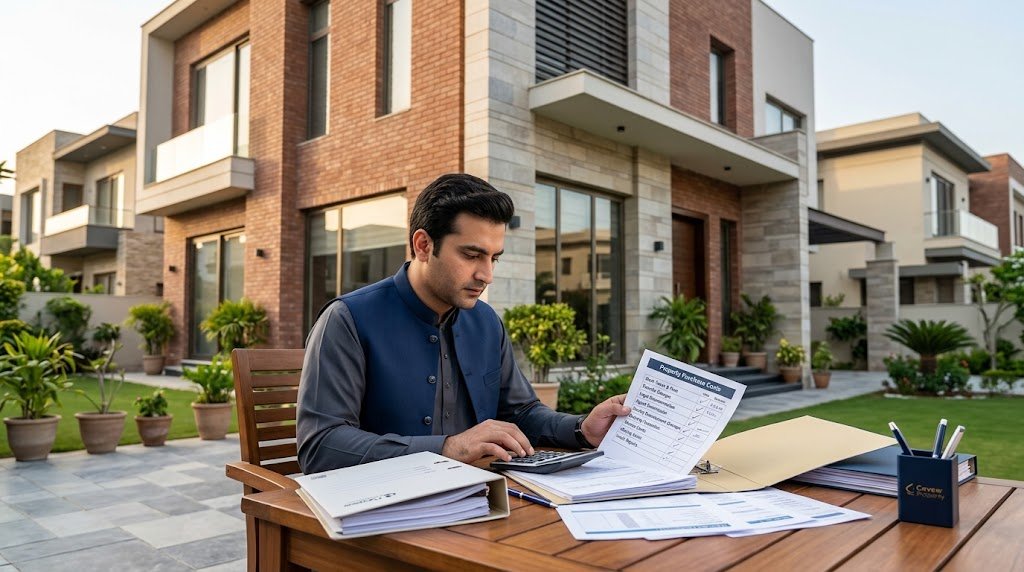
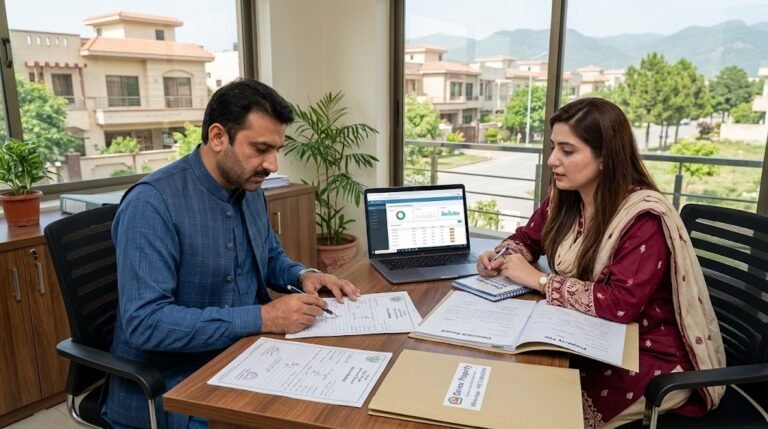
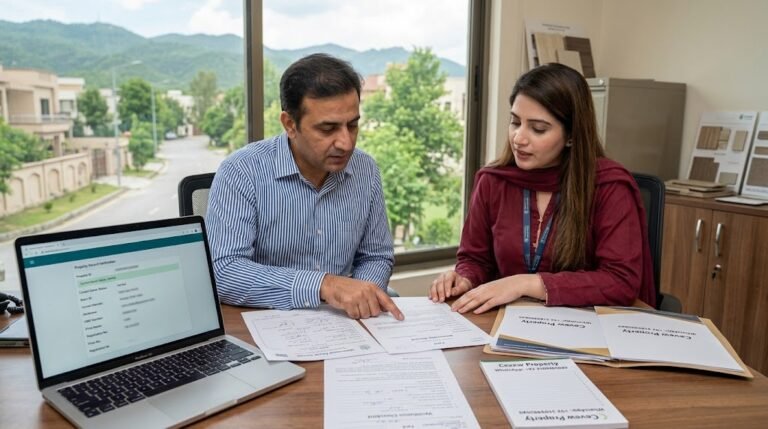
Every property buyer in Pakistan eventually learns the same lesson: the asking price is not the final price. Between government taxes, transfer fees, agent commissions, society charges, and utility connection costs, the total amount you pay can be significantly higher than what you initially budgeted for. Many first-time buyers in Islamabad and Rawalpindi discover these charges only after they have already committed to a property.
This guide walks you through every major hidden cost you should expect when buying property in Pakistan — whether you're purchasing a house in a CDA sector, a plot in a private housing society, or an apartment in Rawalpindi. By understanding these costs upfront, you can plan your budget realistically and avoid uncomfortable surprises during the transaction.
What Are the Hidden Costs of Buying Property in Pakistan?
Hidden costs are all the expenses you must pay beyond the property's agreed sale price. Here are the main categories:
- Government taxes — Stamp duty, capital value tax (CVT), and withholding/advance taxes.
- Transfer and registration fees — Charges paid to CDA, housing societies, or the revenue department.
- Agent commission — Usually 1% to 2% of the property value.
- Legal and documentation fees — For document verification, sale deed preparation, and professional advice.
- Society-specific charges — NOC fees, transfer charges, and membership fees in private societies.
- Utility connection costs — New electricity, gas, and water connection fees.
- Repair and renovation costs — For older properties that need immediate work.
Government Taxes and Duties
When you buy property in Pakistan, the government collects several taxes. These are not optional — skipping them can cause serious problems later, including difficulty transferring the property to your name or selling it in the future.
Stamp Duty
A tax paid on the property transaction documents. The rate varies by province and property value. In Punjab (which includes Rawalpindi), stamp duty is calculated as a percentage of the property's declared value. In Islamabad Capital Territory, the rate may differ.
Capital Value Tax (CVT)
Applicable in Islamabad Capital Territory for properties within CDA sectors. The rate varies based on property type and classification. CVT is collected by the Excise and Taxation Department of ICT.
Withholding / Advance Tax
For certain buyers (especially tax filers and non-filers), the government may require advance tax on property transactions. The rate for non-filers is typically higher than for filers. This is adjustable against your annual tax liability.
Registration Fee
A fee paid to the sub-registrar office or relevant authority for registering the property transfer in official records. This is separate from stamp duty and is charged per transaction.
Rates for stamp duty, CVT, and other government taxes change periodically and may differ based on your tax filing status, the property's declared value, and the specific location. Do not rely on old information or word of mouth. Always confirm current rates with the relevant government authority — the Excise and Taxation Department for Islamabad, the Punjab Board of Revenue for Rawalpindi, or the appropriate provincial department.
If you are a tax filer, make sure to mention this during the transaction. Tax filers often pay lower withholding tax rates than non-filers. If you are a non-filer, consider becoming a filer before purchasing property — the tax savings can be significant, especially for higher-value properties.
Transfer and Registration Fees
Transfer fees are the charges you pay to officially transfer ownership of the property from the seller to you. The process and fee structure depend on which authority governs the property.
| Property Type | Governing Authority | Typical Transfer Process |
|---|---|---|
| CDA Sector Property (Islamabad) | Capital Development Authority (CDA) | Transfer deed executed before the CDA's authorized officer. Society and authority fees apply. Always confirm current fee schedule. |
| Private Housing Society (e.g., Bahria Town, DHA) | Society's Transfer Office | Internal transfer process. Society charges transfer fees, NOC fees, and may require clearance of outstanding dues. The society's records are the ultimate authority. |
| Revenue Record Property (parts of Rawalpindi and peri-urban areas) | Punjab Board of Revenue / Sub-Registrar Office | Sale deed registered at the sub-registrar office. Mutation (Intiqal) applied in revenue records. Stamp duty and registration fees apply. |
| Apartment / Flat | Building Management or Society | Transfer through the building or society management. May involve transfer fees, maintenance clearance, and NOC from the developer. |
← Scroll horizontally to view the full table →
The key takeaway here is simple: each property type has a different transfer authority, and each authority has its own fee schedule. Before you commit to a property, visit the relevant authority's office and ask about the complete list of transfer charges. Do not accept a verbal estimate from an agent or seller — get the official fee schedule in writing or verify it yourself.
Agent Commission and Brokerage
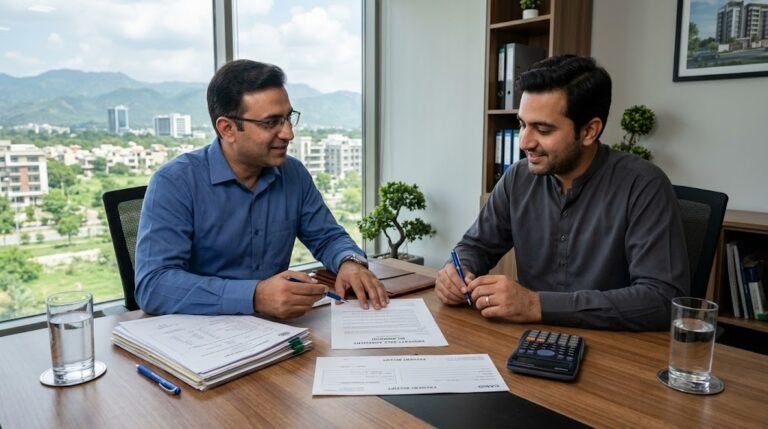
Real estate agents and property dealers in Pakistan typically charge a commission based on the property's sale price. The standard range in Islamabad and Rawalpindi is 1% to 2% of the property value, though this is negotiable and can sometimes be lower for high-value properties or higher for very small transactions.
How Commission Adds Up
If you buy a house for Rs. 3 crore and the agent charges 1.5% commission, that's Rs. 4.5 lakh in commission alone. On top of that, you still have to pay government taxes, transfer fees, and possibly legal fees. Suddenly, a Rs. 3 crore property becomes a Rs. 3.15–3.25 crore total commitment. This is why budgeting for the total cost is critical.
Some important points about agent commissions:
- Commission is negotiable. Don't hesitate to discuss the rate before you start viewing properties.
- Clarify who pays the agent. In Pakistan, the buyer typically pays the commission, but sometimes the seller also pays a portion. Make this clear before signing anything.
- Get the commission agreement in writing. A verbal agreement about commission can lead to disputes later.
- Some online platforms charge lower fees. When browsing listings on Cevew Property, you can often connect directly with sellers or agents without inflated brokerage.
Legal and Documentation Fees
Hiring a lawyer or a professional property document specialist is not mandatory, but for first-time buyers, it can be one of the smartest investments you make. A qualified professional can verify ownership records, flag missing documents, and help you understand the transfer process before you commit money.
Legal and documentation fees typically include:
- Document verification fees — For checking ownership records, Fard, NOC, and society clearance certificates.
- Sale deed preparation — Drafting the legal document that transfers ownership from seller to buyer.
- Professional consultation — Hourly or flat fees for a lawyer's advice on the transaction structure and potential risks.
- Power of attorney — If any party is represented through a legal representative, POA drafting and attestation fees may apply.
The cost of a good property lawyer is a fraction of what you could lose by buying a property with disputed ownership or missing documents. Consider legal fees an insurance premium against catastrophic losses. For most buyers in Islamabad and Rawalpindi, spending Rs. 50,000 to Rs. 200,000 on professional legal help is reasonable, depending on the property value and complexity.
Society-Specific Charges
If you are buying property in a private housing society — such as Bahria Town, DHA Islamabad, Gulberg Residencia, Soan Garden, or PWD — you will face additional charges that do not apply to CDA-sector properties. These societies are private entities with their own management, transfer offices, and fee structures.
Common Society Charges to Expect
- No Objection Certificate (NOC) fee — Most societies require an NOC before a transfer can proceed. This confirms there are no outstanding dues or disputes on the property.
- Transfer fee — The society charges its own transfer fee, separate from any government tax. The amount varies by society and property size.
- Membership transfer fee — Some societies require the buyer to become a member and pay a membership transfer fee.
- Outstanding dues clearance — If the seller has unpaid society maintenance fees, development charges, or utility bills, the society will require these to be cleared before transferring ownership. You may need to negotiate who pays these.
- Development charges — In some societies, buyers must pay or assume development charges that were deferred by the original allotment holder.
Always visit the society's transfer office yourself before paying any money. Confirm the complete list of fees, outstanding dues, and transfer requirements. Do not rely on the seller's word or the agent's assurance. The society's records are the ultimate source of truth for private society properties.

Always verify society-specific charges directly at the society's transfer office before paying any token amount.
Utility Connection Costs
When you buy a property, the existing utility connections may or may not transfer to your name automatically. In many cases, you will need to pay transfer fees or new connection charges for electricity, gas, and water. These costs are often overlooked by first-time buyers.
What to Check for Each Utility
| Utility | What to Check | Potential Costs |
|---|---|---|
| Electricity | Is the connection in the seller's name? Are there any outstanding bills? Does the meter need to be transferred? | Meter transfer fee, new connection deposit (if applying fresh), any outstanding bill settlement. |
| Gas | Is there a gas line? Is the connection active? Has the seller paid all gas bills? | Connection transfer fee, new gas connection application fee (if no existing connection), security deposit. |
| Water | Is water supplied by CDA, the society, or a private boring? Is there a water connection in place? | Water connection transfer, boring installation (if no existing source), tanker supply costs during transition. |
| Internet/TV | Is there an existing connection from a local provider? Will it transfer easily? | Usually minimal, but some societies have exclusive provider arrangements with setup fees. |
← Scroll horizontally to view the full table →
Before buying, ask the seller to provide recent utility bills in their name for electricity, gas, and water. This shows the connections are active, reveals any unpaid balances, and confirms the seller actually possesses the property. If the seller cannot provide these bills, ask why.
Repair and Renovation Costs
Unless you are buying a brand-new, never-occupied property, you should expect to spend money on repairs and renovations. Even properties that look well-maintained in photographs may have hidden issues that only become apparent after you move in.
Common repair costs include:
- Structural repairs — Cracked walls, roof leakage, foundation issues, and water damage.
- Electrical work — Replacing outdated wiring, adding power outlets, installing new circuit breakers.
- Plumbing — Fixing leaking pipes, replacing fixtures, clearing drainage blockages.
- Paint and finishing — Repainting interior and exterior, repairing damaged tiles or flooring.
- Kitchen and bathroom upgrades — Replacing countertops, cabinets, sanitary fixtures, and water heaters.
- Security installations — Installing gates, locks, CCTV, or boundary walls if the property lacks them.
For an older house in an established area of Rawalpindi or Islamabad, repair costs can range from 2% to 8% of the property value. For a plot with a partially constructed structure, the costs can be significantly higher. Budget for repairs separately from your transaction costs.
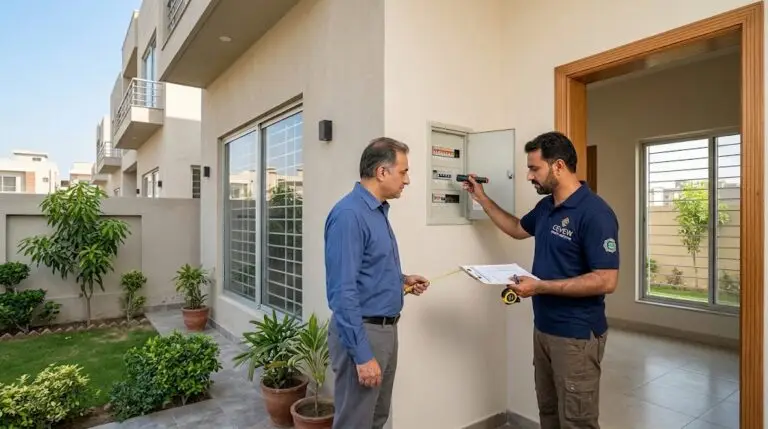
Before making an offer, consider getting a professional property inspection. A qualified inspector can identify issues you might miss and give you a realistic estimate of repair costs. This information can also be used as a negotiation tool — if significant repairs are needed, you may be able to negotiate a lower sale price.
Financing and Loan-Related Costs
If you are taking a bank loan or mortgage to buy property in Pakistan, you will face additional costs that many buyers forget to include in their budget. Even if you are paying cash, understanding these costs can help you negotiate better.
Loan-Related Costs to Consider
- Bank processing fees — Most banks charge a processing fee for evaluating and approving your loan application. This is typically 0.5% to 1% of the loan amount.
- Property valuation fee — The bank will require a professional property valuation before approving the loan. This valuation cost is usually borne by the buyer.
- Legal fees — The bank's legal team will review the property documents and charge fees for this service.
- Insurance — Many banks require property insurance or mortgage insurance before disbursing the loan. Annual premiums may be required.
- Markup / interest rate — The interest rate on your loan will significantly affect your total cost of ownership. Compare rates across multiple banks before committing.
- Early repayment penalties — Some banks charge penalties if you repay the loan before the agreed term. Ask about this before signing.
If you are buying with a bank loan, your total cost of purchase includes the loan interest over the entire repayment period — not just the upfront fees. A Rs. 2 crore loan at 15% interest over 15 years means you will pay significantly more than Rs. 2 crore in total. Factor this into your long-term budget, not just your immediate purchase plan.
How to Budget for Hidden Costs Properly
The single most important thing you can do as a buyer is to create a realistic, complete budget before you start looking at properties. Here is a practical step-by-step approach:
-
01
Calculate Your Total Available Funds
This includes your savings, any family contributions, your approved loan amount, and any other liquid assets you can access for this purchase.
-
02
Deduct a 10% Buffer for Hidden Costs
Take your total available funds and multiply by 0.90. This is your maximum property price. The remaining 10% is your budget for taxes, fees, and other expenses. If your available funds are Rs. 3 crore, look for properties priced at Rs. 2.7 crore or less.
-
03
Identify Your Property Type and Location
Different areas and property types have different hidden cost profiles. A house in a CDA sector has different fees than a plot in Bahria Town. Research the specific charges for your target area and property type.
-
04
Visit the Relevant Authority
Go to the CDA office, society transfer office, or sub-registrar office and ask for the official fee schedule. Get it in writing if possible. This is the only way to know your true costs.
-
05
Add a Contingency Fund
Even with careful research, unexpected costs arise. Add another 2–3% of the property value as a contingency fund. This protects you from last-minute surprises.
-
06
Compare Properties Using Total Cost
When comparing two properties, calculate the total cost of purchase for each — not just the asking price. A slightly more expensive property with lower transfer fees may be cheaper overall than a "bargain" with high society charges.
The buyers who avoid financial stress are not the ones who find the cheapest property. They are the ones who know exactly what the total cost will be before they make an offer.
Common Mistakes Buyers Make with Hidden Costs
Understanding the hidden costs is one thing — actually budgeting for them correctly is another. Here are the mistakes we see most frequently among property buyers in Islamabad and Rawalpindi.
Mistake #1: Basing the Search Only on the Asking Price
Many buyers start by searching for properties that match their entire available budget. But the asking price is not the total cost. If your total budget is Rs. 2.5 crore, you should be looking at properties priced at Rs. 2.2–2.3 crore to leave room for transaction costs.
Mistake #2: Forgetting About the Agent's Commission
Agent commission is often the largest single "hidden" cost after government taxes. If you're working with multiple agents, make sure you understand who you're ultimately paying and how much. Don't assume the seller covers the commission — in Pakistan, the buyer typically pays it.
Mistake #3: Underestimating Society Charges
Private societies often have multiple layers of charges that buyers don't anticipate. A property in a society may have a low asking price specifically because there are outstanding dues or high transfer fees. Always verify the complete fee schedule at the society's office.
Mistake #4: Ignoring the Cost of Making the Property Liveable
A property that needs significant repairs or utility reconnections can cost far more than you think. Fresh paint and good photographs can hide serious issues. Always factor in a realistic repair budget.
Mistake #5: Not Confirming Tax Filing Status
If you're a tax filer, you may pay significantly less withholding tax than a non-filer. If you're not a filer, becoming one before your property purchase could save you a substantial amount. Consult a tax professional to understand your specific situation.
To avoid these and other mistakes, check out our detailed guide on common mistakes first-time home buyers make.
Hidden Costs Checklist for Buyers
Use this checklist before making an offer on any property in Pakistan. Go through each item and write down the actual amount or estimate for your specific property.
Complete Hidden Costs Checklist
- Stamp duty — Confirm current rate with the relevant authority. Calculate based on property value.
- Capital Value Tax (CVT) — Applicable only in certain Islamabad areas. Confirm if it applies to your property.
- Withholding / Advance Tax — Check the difference between filer and non-filer rates. Determine which applies to you.
- Registration Fee — Confirm the fee for registering the property transfer in official records.
- Transfer Fees (CDA, Society, or Revenue) — Visit the appropriate office and get the official fee schedule in writing.
- NOC / Society Clearance Fees — If buying in a private society, confirm the NOC fee and any pending dues.
- Agent Commission — Negotiate the rate upfront. Get it in writing. Typically 1–2% of property value.
- Legal / Documentation Fees — Budget for a lawyer or document specialist if you're a first-time buyer.
- Utility Connection Transfers — Electricity, gas, water, and any pending bill settlements.
- Repair and Renovation Budget — Get a professional inspection and estimate realistic repair costs.
- Loan-Related Fees (if applicable) — Processing fees, valuation costs, legal fees, insurance, and markup.
- Contingency Fund — Set aside an additional 2–3% of the property value for unexpected expenses.
For a broader checklist covering all aspects of buying a house in Islamabad and Rawalpindi, refer to our complete house buying checklist.
Islamabad vs Rawalpindi: How Hidden Costs Differ
If you are comparing properties across Islamabad and Rawalpindi, you should understand that hidden costs are not the same in these two cities. The governing authorities, fee structures, and tax rates can differ significantly.
| Factor | Islamabad (CDA Sectors) | Rawalpindi (Revenue Areas) |
|---|---|---|
| Governing Authority | Capital Development Authority (CDA) | Punjab Board of Revenue / Sub-Registrar Office |
| Tax Jurisdiction | Islamabad Capital Territory | Punjab Province |
| Property Registration | CDA Transfer Deed | Sale Deed Registered at Sub-Registrar |
| Mutation / Record Update | CDA Records | Revenue Department Intiqal |
| Typical Fee Structure | CDA-specified fees, generally transparent | Provincial fees, may vary by tehsil and area |
← Scroll horizontally to view the full table →
In general, CDA sector properties in Islamabad tend to have more standardized and transparent fee structures, but the entry prices are significantly higher. Rawalpindi properties (especially in revenue-record areas) may have lower asking prices, but the verification and transfer process can be more complex, and the fee structure may be less predictable.
Properties in private housing societies — whether in Islamabad or Rawalpindi — follow the society's own internal fee schedule, which may be entirely different from government-authority fees. Always confirm the specific charges for your target property directly with the relevant society office.
For a deeper understanding of how to choose between areas, read our guide on choosing the right location when buying a house.
Key Takeaways
- Hidden costs add 5–12% to the property price — Never budget only for the asking price.
- Government taxes are mandatory — Stamp duty, CVT (where applicable), and withholding tax cannot be avoided. Rates change, so confirm current figures.
- Society charges vary widely — Always visit the society's transfer office yourself to get the official fee schedule.
- Agent commission is negotiable — Typically 1–2%, but you should negotiate and get the rate in writing before viewing properties.
- Utility transfers cost money — Electricity, gas, and water connections may require transfer fees or new deposits.
- Repairs can be significant — Get a professional inspection and budget realistically for making the property liveable.
- Islamabad and Rawalpindi have different fee structures — Know which authority governs your target property and what that means for your costs.
- Add a contingency fund — Set aside an additional 2–3% of the property value for unexpected expenses.
Frequently Asked Questions
How much should I budget for hidden costs when buying property in Pakistan?
As a general rule, budget 5% to 12% of the property's sale price for hidden costs. This includes government taxes, transfer fees, agent commission, legal fees, utility connections, and a contingency fund. The exact percentage depends on the property type, location, and governing authority. For example, a property in a private society with high transfer fees will have higher hidden costs than a CDA-sector property with standard charges.
Who pays the agent commission when buying property in Pakistan?
In Pakistan, the buyer typically pays the agent commission, although this can vary. The standard rate is 1% to 2% of the property value, but it is negotiable. Always clarify who is paying the commission and confirm the rate in writing before you start viewing properties. If you find a property directly through a listing on Cevew Property, you may be able to reduce or avoid agent fees altogether.
Is Capital Value Tax (CVT) applicable on all property in Islamabad?
Capital Value Tax (CVT) is applicable in Islamabad Capital Territory, but the specific properties and rates can vary. It is primarily applied to properties within CDA sectors. Properties in private housing societies may follow different tax rules. Always confirm current CVT rates and applicability with the Excise and Taxation Department of Islamabad before finalizing your budget.
Can I avoid paying hidden costs when buying property in Pakistan?
No, you cannot avoid legitimate government taxes and transfer fees. Attempting to under-declare property values or skip official registration can lead to legal problems, difficulty selling the property later, and potential financial penalties. However, some costs are negotiable — such as agent commission and certain professional fees. The key is to budget for all mandatory costs upfront rather than trying to avoid them.
What is the difference between stamp duty and registration fee?
Stamp duty is a tax paid on the legal document that records the property transaction — typically calculated as a percentage of the property's declared value. Registration fee is a separate charge paid to the authority (sub-registrar office, CDA, or society) for registering the property transfer in official records. Both are mandatory, but the rates and calculation methods differ by jurisdiction. Confirm both separately with the relevant authority.
Should I buy a property that has outstanding society dues?
Buying a property with outstanding society dues is risky and generally not recommended. The society will require all dues to be cleared before transferring ownership. You may end up paying the seller's unpaid bills. If you do consider a property with outstanding dues, negotiate with the seller to clear all dues before the transfer — not after. Get written confirmation from the society that the property is clear of all charges before you pay any money.
How do I find out the exact hidden costs for a specific property?
The most reliable way is to visit the governing authority directly. For a CDA sector property, visit the CDA office. For a private society property, visit that society's transfer office. For a revenue-record property in Rawalpindi, visit the sub-registrar office. Ask for the complete fee schedule in writing. Do not rely on estimates from agents or sellers — always verify independently. You can also consult a property lawyer who specializes in Islamabad and Rawalpindi transactions for professional guidance.
Related Guides for Property Buyers
Ready to Find Your Property — With Full Transparency?
Now that you understand the hidden costs of buying property in Pakistan, you can search with confidence. Browse verified listings across Islamabad and Rawalpindi on Cevew Property, and compare properties using the total cost — not just the asking price.
Browse Properties for SalePrefer to list a property? List your property on Cevew — or explore Islamabad areas and Rawalpindi areas.