How to Buy a Flat or Apartment Safely
Buying a flat or apartment is one of the biggest financial decisions most people ever make. It is also one of the easiest decisions to get wrong — not because buyers are careless, but because most of the important details are simply not visible during a short visit.
An apartment can look perfect during a viewing. The paint is fresh, the flooring is new, the view is good, and the price sounds reasonable. What a viewing does not show you is the state of the ownership documents, the building approval, the outstanding dues, the construction quality behind the walls, the maintenance arrangements, the utility connections, or whether the seller actually has the right to sell.
Learning how to buy a flat or apartment safely is mostly about asking the right questions in the right order — before money changes hands, not after.
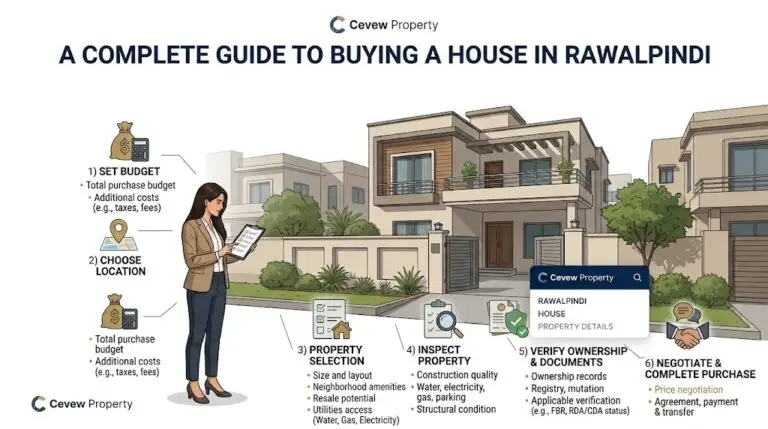
A safe apartment purchase follows a simple sequence: set a realistic total budget, shortlist the location carefully, verify who legally owns the property, check the documents and the building or project records, inspect the unit physically, confirm utilities and recurring charges, clarify any outstanding dues, and only then commit to token, bayana, or final payment. No single document proves that a property is completely safe. Verification works best as a set of checks — through the relevant authority, the society or project management, and a qualified legal or property professional where the transaction is complex.
This guide walks through that sequence step by step. It is general property-buying information, not legal advice. Rules, documents, and requirements can vary by city, development authority, housing society, project, and property type — so where ownership, NOC, transfer, tax, or litigation is involved, always confirm with the relevant authority and a qualified professional.
Why Should You Check a Flat Carefully Before Buying?
A property purchase involves a large amount of money, usually saved over many years or financed through a long-term commitment. Whether you plan to live in the apartment for decades or hold it as an investment, the quality of your decision affects you for a long time.
Problems with ownership or documentation are the most serious kind. If the title is unclear, if the seller's right to sell is questionable, or if the property is tied up in an inheritance dispute, you may find it difficult to complete the transfer, register the property in your name, or sell it later.
Physical problems come next. Water leakage, dampness, poor drainage, weak plumbing, and damaged electrical fittings may not be obvious on a bright afternoon. Repairing them later can add significant cost on top of the purchase price.
Then there are building and society-related issues. Unpaid maintenance dues, unclear parking rights, incomplete project approvals, or restrictions on transfer and resale can all affect how you use the property — and what you can do with it in the future.
A buyer visits an apartment with freshly painted walls, new light fittings, and neatly arranged furniture. The price is slightly below similar units nearby, and the buyer feels this is a good deal. What the visit does not show is that the monthly maintenance has not been paid for over a year, that the parking space belongs to a different unit, and that the ownership record still lists a previous owner who has passed away. None of these issues were visible during the viewing — but all of them surfaced later.
The lesson is simple. Attractive photos and good interior decoration tell you how a flat looks. They do not tell you whether it is safe to buy.
Set Your Budget Before Looking for an Apartment
Many buyers begin with the advertised price and treat that as the budget. In reality, the advertised price is only one part of the total cost. Understanding the full picture before you start viewing properties keeps you from stretching beyond what you can comfortably afford.
Costs to Include in Your Budget
- Purchase price of the flat
- Token or booking amount
- Transfer-related expenses
- Taxes and applicable charges
- Legal and document verification costs
- Renovation and repair work
- Furniture and appliances
- Moving and shifting costs
- Monthly maintenance charges
- Utility connection or transfer costs
- Building or society charges
- A reasonable contingency buffer
Tax rates and transfer charges vary by location, property type, and the authority involved, and they can change over time. Rather than relying on a figure you heard from someone, confirm the current position with the relevant authority or a qualified professional handling your transaction.
A useful habit is to write down two numbers: the maximum you can pay for the property itself, and the maximum you can afford in total. If a flat only works when you ignore the second number, it is probably not the right flat.
Check the Location Before Buying a Flat
Location affects almost everything about daily life in an apartment — how long your commute takes, how easily your children get to school, how quickly help arrives in an emergency, and how much demand there will be if you ever rent it out or sell it.
Location Checklist
- Road access and street condition
- Nearby schools and colleges
- Hospitals and clinics
- Markets and grocery access
- Public transport options
- Daily work commute time
- Mosques and community facilities
- Parking availability on the street
- General security of the area
- Water availability in the area
- Electricity reliability
- Internet and mobile coverage
- Planned or ongoing development nearby
- Condition of surrounding properties
In Islamabad and Rawalpindi, it is more useful to research the specific sector, block, society, and building rather than judging an entire city by its general reputation. Two sectors in the same city can differ significantly in road access, water supply, security, and building quality. Before you commit, it also helps to look at browse available properties in the specific areas you are considering so you can compare realistic options side by side.
Visit the location at different times of day if you can. A road that is quiet on a Sunday morning may be heavily congested on a weekday evening.
Verify Who Actually Owns the Apartment
Ownership verification is the single most important check in the entire process. Everything else — price, condition, location, size — becomes irrelevant if the person selling the flat does not have a valid right to sell it.
Buyers should confirm the seller's identity, the ownership records, the title-related documents, the transfer history, and any records held by the relevant authority or housing society. It is also worth understanding whether the property has passed through inheritance, whether there are multiple owners, and whether anyone else has a claim on it.
What you should not do is rely on verbal assurances. A seller saying "the documents are all clear" is not verification. An agent saying "this is a genuine deal" is not verification. Even a photocopy of a document is not verification on its own.
Verification should go through the relevant authority, housing society, or project management — and through a qualified legal professional for anything complex. The exact documents and procedures differ between authorities and property types, so treat any generic checklist as a starting point, not as proof.
Check the Flat or Apartment Documents
Once you know who the owner is, the next step is to review the paperwork. The exact set of documents varies by property, development authority, housing society, project, and type of transaction — so the list below is a practical starting point rather than a universal requirement.
Documents That May Be Relevant
- Ownership or title documents
- Allotment documents
- Transfer documents
- Possession documents
- Approved building or project records
- Society or authority records
- NOC or approval-related documents where applicable
- Utility records and connections
- Tax, dues, and payment records
- Seller identification documents
- Power of attorney where applicable
- Any prior sale or transfer history
Review documents in their original form where possible, and check that names, property descriptions, and numbers match consistently across them. Small mismatches — a different spelling, an outdated unit number, an unrecorded transfer — are worth resolving before you pay anything, because they tend to grow into larger problems later.
For complex documentation, the sensible approach is to have a qualified legal professional review the file rather than interpreting it yourself.
Check the Building and Project Status
Buying a flat means buying into a building, and often into a project or society as well. Even a well-maintained apartment can be a difficult purchase if the building itself has unresolved issues.
Building and Project Checks
- Project approval status
- Relevant development authority
- Building permissions
- Society or project records
- Completion or possession status where applicable
- Condition of common areas
- Parking arrangements
- Lift condition and maintenance
- Staircase condition and access
- Fire-safety provisions where applicable
- Water supply arrangements
- Electricity arrangements
- Sewerage and drainage
- Maintenance and management setup
Some of these can be observed during a visit. Others — approval status, project records, completion stage — need to be confirmed with the responsible authority or the project management. If a seller is unable to explain the building's approval position, that is a reason to slow down and verify independently rather than to accept an explanation.
Inspect the Flat Before Buying
Photographs cannot replace a physical inspection. A camera does not capture the smell of dampness, the sound of water running through old pipes, the temperature difference near a leaking wall, or the way a door sticks because the frame has shifted.
Physical Inspection Checklist
- Walls for cracks and damp patches
- Ceilings for stains and seepage
- Floors for unevenness or damage
- Doors and door frames
- Windows and seals
- Plumbing fixtures
- Water pressure at taps and showers
- Signs of water leakage
- Bathroom condition and drainage
- Kitchen condition and ventilation
- Electrical fittings and wiring
- Switches and sockets
- Air-conditioning provisions
- Natural light in each room
- Ventilation and airflow
- Balcony condition and safety
- Storage space
- Parking space condition
- Noise levels inside the unit
- Common areas and corridors
Signs of dampness, water leakage, cracks, poor drainage, or damaged fixtures should be investigated before purchase, not after. Ask what caused them, how long they have existed, and whether any repair work has been attempted. If the answers are vague, arrange for a second opinion from someone with construction or engineering knowledge.
For a more detailed room-by-room approach, our guide on how to inspect a house before buying walks through what to look at and what to photograph.
Check Water, Electricity, Gas, and Other Utilities
Utility availability affects how comfortable the apartment is to live in — and sometimes whether it is usable at all. It also affects your monthly costs, so it deserves proper attention.
Utility Checks
- Electricity connection and load
- Water supply source and reliability
- Gas availability where applicable
- Sewerage and drainage connection
- Internet availability and providers
- Mobile signal strength inside the flat
- Backup power arrangements
- Building-level utility systems
- Meter arrangements
A key question is how the utilities are metered and managed. Some apartments have individual meters for each unit. Others share a meter across the building, with costs divided between residents. Some are prepaid, some are billed through the society, and some are managed entirely by the building management. Each arrangement affects how you pay and how much control you have.
Utility availability is not the same everywhere, even within the same city. Do not assume that a particular service is available in every area, block, or building — confirm it for the specific property you are considering.
Ask About Maintenance and Building Charges
Apartment ownership usually comes with recurring costs. These are easy to overlook because they do not appear in the advertised price, but over a few years they can add up to a meaningful amount.
Recurring Charges to Ask About
- Monthly maintenance charges
- Building management charges
- Lift maintenance
- Security staff and systems
- Cleaning and waste collection
- Parking charges
- Generator or backup power costs
- Water charges
- Other society or building fees
Ask for written information about both the recurring charges and any outstanding amounts where available. A verbal figure given during a viewing may not reflect the actual billing, and it may not include charges that are collected less frequently.
Understanding unpaid dues before completing a transaction is important, because these amounts can become a point of dispute between buyer and seller. Clarify who is responsible for settling them, and get that clarified in writing.
Verify Parking and Common Areas
Parking is one of the most common sources of misunderstanding in apartment purchases. Many buyers assume a parking space comes with the flat, only to discover later that parking is allocated separately, owned by another unit, or shared on a first-come basis.
Parking and Common Area Checks
- Whether parking is included in the sale
- Whether parking is separately owned or assigned
- Visitor parking arrangements
- Location of the parking space
- Access to common areas
- Rooftop rights where applicable
- Storage areas
- Lift access and condition
- Staircase access
- Building entrance and security
Rights over parking and common areas should be confirmed through documents and building or society records, not through assumptions. If a seller says a parking space "goes with the flat," ask where that is recorded.
Check for Outstanding Property and Building Dues
Before completing a purchase, ask directly whether there are any unpaid amounts attached to the property. This is a normal question, and a genuine seller should have no difficulty answering it.
Dues to Clarify
- Unpaid utility bills
- Society charges
- Maintenance fees
- Property-related dues
- Building charges
- Any other applicable payments
Once you know what is outstanding, establish clearly who will settle those amounts before the transaction closes. Depending on the situation, this might be handled by the seller, deducted from the sale proceeds, or addressed directly with the society or building management.
The legal position on unpaid dues can vary depending on the agreement and the rules of the relevant society or authority. Rather than assuming an outcome, confirm the arrangement in writing and, where the amounts are significant, seek professional guidance.
Check Whether the Property Has Any Legal Dispute
Some property problems do not appear on the surface. A flat may look normal and be occupied normally, while a dispute over ownership, inheritance, or repayment is quietly running in the background.
Issues Worth Investigating
- Ownership disputes
- Inheritance disputes
- Pending court cases
- Mortgage or financing claims
- Unauthorized or disputed transfers
- Power-of-attorney concerns
- Other restrictions affecting the transaction
This is an area where professional legal verification matters most. If there is any indication of a dispute, or if the ownership history is complicated, it is sensible to involve a qualified lawyer before committing substantial funds. Resolving a dispute after payment is far more difficult than identifying it beforehand.
If you want a broader starting point on general buyer questions, our property FAQs cover common situations buyers ask about.
Verify the Seller Before Paying
The person receiving your money should be the person entitled to receive it. That sounds obvious, but it is not always straightforward — especially in transactions involving multiple owners, family members, or representatives.
Seller Verification Points
- Seller's identity documents
- CNIC or applicable identification
- Ownership records in the seller's name
- Contact details and address
- Relationship to the property
- Authority to sell
- Power of attorney where applicable
- Multiple-owner situations
- Inheritance situations
If someone is selling on behalf of another person, the authority under which they are acting needs careful verification. A power of attorney, for example, has its own requirements and limitations, and it should be checked properly rather than accepted at face value. Where several people own the property jointly, all of their positions should be understood before you proceed.
Be Careful Before Paying Token or Bayana
A token is a small reservation payment that gives you time to complete basic checks. Bayana is a larger, more formal part-payment that signals a firmer commitment. Both are common in Pakistani property transactions, and both deserve more attention than they usually get.
Before paying either, make sure you understand the terms in writing. Verbal understandings are difficult to prove later, and disagreements over token and bayana payments are among the most common property disputes.
What the Written Terms Should Cover
- Payment amount and date
- Refund conditions
- Transaction deadlines
- Document verification requirements
- Seller obligations
- Buyer obligations
- What happens if documents cannot be verified
- What happens if either party does not complete
Keep proper written records and receipts for every payment you make. A signed receipt that clearly states the amount, the property, the date, and the conditions is far more useful than a bank transfer with no explanation attached.
The legal treatment of token and bayana can depend on what was agreed and on the applicable law, so there is no single universal interpretation. For larger payments, have the terms reviewed by a qualified professional before signing.
Verify the Documents Before Making the Final Payment
The final payment is the point of no return. Everything that can reasonably be checked should be checked before you reach it — not after.
Final Verification Points
- Ownership confirmed
- Transferability confirmed
- Authority records checked
- Outstanding dues clarified
- Seller identity verified
- Project or building status confirmed
- Possession status confirmed
- Applicable approvals in place
- Any restrictions identified
Where the transaction involves complex ownership, inheritance, a power of attorney, or a high value, having a qualified legal or property professional handle the verification is a practical decision rather than an unnecessary expense.
Understand Possession and Property Transfer
Several terms get used during a property transaction, and they do not all mean the same thing. Confusing them can lead to misunderstandings about what you are actually buying and when you can use it.
| Term | What It Usually Means |
|---|---|
| Booking | An initial step where you express intent and often pay a small amount to reserve a unit. |
| Allotment | A unit is formally assigned to you by the project, society, or authority, usually after payment stages are met. |
| Possession | Physical handover of the property — you receive the keys and can use the unit. |
| Ownership | Legal recognition that the property belongs to you, supported by the relevant records. |
| Transfer | The documented process of moving the property from the seller's name into yours in the official records. |
These terms can carry different meanings depending on the project, the society, and the authority involved. What matters is confirming exactly what you are buying and what documents you will receive after payment and transfer. If you are paying for possession but expecting ownership, or the other way around, that gap needs to be resolved before the transaction closes.
Once you have a clear picture of the process, it becomes much easier to properties for sale in your target area and compare them on a like-for-like basis.
Compare Flats Before Making a Decision
Buyers often compare apartments on price alone. Price matters, but it is only one factor among many, and a lower price can sometimes mean a higher total cost once everything else is considered.
Comparison Points
- Location and access
- Size and covered area
- Layout and usability
- Current condition
- Building quality
- Parking arrangements
- Utility setup
- Monthly maintenance charges
- Documentation status
- Possession availability
- Accessibility within the building
- Nearby facilities
- Resale potential
- Rental potential
- Overall total cost
A flat that costs less but comes with large unpaid dues, unclear documentation, or a location with poor access is not automatically the better financial choice. Comparing on total cost and clarity — rather than headline price — usually leads to a better decision.
Flat Buying Red Flags You Should Not Ignore
Not every warning sign means something is wrong. But unexplained issues deserve further verification before you proceed, and a cluster of them is a strong signal to slow down.
Warning Signs to Watch For
- Seller refuses document verification
- Pressure to pay immediately
- Unclear ownership
- Missing documents
- Inconsistent information across the deal
- Unexplained low price
- Unpaid dues that nobody will confirm
- Unclear possession status
- Unclear parking rights
- Repeated water leakage
- Serious dampness
- Major structural concerns
- Unclear project approval
- Seller cannot explain the transfer process
- Requests for large cash payments without documentation
One red flag does not automatically prove fraud. It does, however, mean the issue should be explained and verified before money changes hands. If the explanation is evasive or keeps changing, that itself is information.
Step-by-Step Process for Buying a Flat or Apartment Safely
Putting everything together, a safe apartment purchase generally follows these eight steps.
Define Your Budget
Work out both the maximum purchase price and the maximum total cost, including transfer expenses, maintenance, renovation, and a contingency buffer. Decide this before you start viewing.
Choose the Location
Shortlist specific sectors, blocks, or societies rather than whole cities. Check access, facilities, utilities, security, and how the area is likely to develop over the coming years.
Shortlist Suitable Flats
Compare a handful of realistic options on size, layout, condition, building quality, parking, and recurring charges — not just asking price.
Visit and Inspect the Apartment
Walk through the unit carefully. Look for dampness, leakage, cracks, plumbing issues, electrical problems, and the condition of common areas. Visit more than once if possible.
Verify Ownership and Documents
Confirm who owns the property and review the relevant records through the appropriate authority, society, or project management — with professional help where the situation is complex.
Check the Building, Project, and Outstanding Dues
Confirm the building or project status, utility arrangements, maintenance setup, and any unpaid amounts attached to the property.
Agree on Written Transaction Terms
Put the price, payment schedule, deadlines, refund conditions, and obligations of both parties in writing before any significant payment.
Complete the Transfer and Payment Properly
Follow the documented transfer process through the relevant authority or society, keep receipts for every payment, and confirm that the records are updated in your name.
Questions to Ask Before Buying a Flat
These questions cover most of what you need to know. Ask them early, and where the answers matter to your decision, get them in writing.
Key Questions for the Seller
- Who is the legal owner of the property?
- Why is the property being sold?
- Are all ownership documents available?
- Is the property transferable?
- Is possession available now?
- Are there any outstanding dues?
- Is there any mortgage or financing claim?
- Is there any dispute connected to the property?
- What exactly is included in the sale?
- Is parking included, and how is it recorded?
- What are the monthly maintenance charges?
- Are utilities individually metered?
- What documents will I receive after transfer?
- Are there any restrictions on resale or rental?
If a seller cannot answer a question, that is not automatically a problem — but it does mean you should verify the point independently rather than assume the answer.
When Should You Consult a Property or Legal Professional?
Many straightforward transactions can be completed with careful checking and standard documentation. Others benefit significantly from professional involvement.
Situations Where Professional Help Is Useful
- Unclear or disputed ownership
- Multiple owners
- Inheritance matters
- Power of attorney arrangements
- Property involved in a dispute
- Complex or incomplete documentation
- High-value transactions
- Unclear transfer procedure
- Society or project documentation concerns
- Mortgage or financing issues
A property or legal professional can help identify issues that a buyer may overlook, and can guide you through the correct process for your specific authority or society. That said, no professional can guarantee a completely risk-free transaction — their role is to reduce risk through proper verification and documented process.
Explore Property Options with Cevew Property
Cevew Property is a property platform focused on listings and real-estate information for Islamabad and Rawalpindi, covering houses, flats, apartments, plots, and rental properties.
If you are at the research stage, it helps to look at real listings alongside practical guidance. You can start on the Cevew Property homepage, or read more property guides and real estate articles covering buying, selling, renting, and documentation topics.
Whether you are buying for personal use, for family, or as an investment, the same discipline applies: look carefully, verify properly, and document the process.
Frequently Asked Questions
Is it safe to buy a flat in Pakistan?
The safety of a property transaction depends on several factors: who legally owns the property, whether the documentation is complete and consistent, the status of the building or project, the physical condition of the unit, any outstanding dues, and whether proper verification has been carried out. A transaction that goes through these checks carefully is generally lower risk than one that skips them.
What should I check before buying an apartment?
At minimum, check ownership, documents, building or project status, physical condition, utilities, maintenance charges, outstanding dues, parking rights, possession status, and the transfer requirements for that specific property and authority. Each of these is covered in more detail in the sections above.
How do I verify flat ownership?
Ownership should be verified through the relevant official, authority, or society records — not through verbal statements from the seller or an intermediary. Where the ownership history is complicated, involving a qualified legal professional is a sensible step. The specific records to check vary depending on the property and the authority involved.
Should I inspect a flat before buying it?
Yes. A physical inspection is essential. Photographs and videos cannot show dampness, water leakage, poor water pressure, drainage problems, structural cracks, or the condition of common areas and building systems. For a room-by-room approach, see our guide on how to inspect a property before buying.
What documents should I check before buying a flat?
The relevant documents vary by property, development authority, housing society, project, and transaction type. They may include ownership or title records, allotment documents, possession documents, transfer records, approved building or project records, NOC or approval-related documents where applicable, utility and dues records, and seller identification documents. Confirm the exact requirements for your specific property with the relevant authority or a qualified professional.
Should I pay token money before document verification?
Buyers should understand the transaction terms and complete the basic verification they can before committing money. If a token is paid to reserve time for verification, put the terms in writing — including the amount, the property, the deadline, and the refund conditions — and keep a signed receipt. Avoid large payments before documents have been checked.
What is the difference between possession and ownership?
Possession means you have physical control of the property — you have the keys and can use it. Ownership means the property is legally recognised as yours in the relevant records. It is possible to have possession without ownership, or ownership without immediate possession. Confirm which one you are receiving at each stage of the transaction.
How can I check if a property has outstanding dues?
Ask the seller directly, then confirm with the relevant sources — the building management, the housing society, utility providers, or the relevant authority, as applicable. Request written confirmation where possible, and clarify in writing who is responsible for settling any outstanding amounts before the transaction completes.
What are common red flags when buying a flat?
Common warning signs include unclear ownership, missing or inconsistent documents, pressure to pay quickly, unexplained low pricing, unpaid dues that nobody will confirm, unclear possession status, unclear parking rights, repeated water leakage or dampness, structural concerns, unclear project approval, and inconsistent information between different parties.
Should I hire a property lawyer before buying an apartment?
Professional legal verification is particularly useful when ownership is unclear, when there are multiple owners or inheritance matters, when a power of attorney is involved, when the property is disputed, when documentation is complex or incomplete, or when the transaction is high value. A lawyer cannot guarantee a risk-free purchase, but can help identify issues a buyer might miss.
Looking for a Flat or Apartment in Islamabad or Rawalpindi?
Explore available listings across Islamabad and Rawalpindi, and take the time to verify ownership, documents, and building records before making a purchase decision.
About the Author

Ahmad Ali
Ahmad Ali is a web developer, SEO specialist, and content creator associated with Cevew Property. He writes practical property and real-estate guides designed to help buyers, sellers, landlords, tenants, and property professionals understand important steps before making property decisions.