How to Negotiate Property Price With a Seller
Negotiating the price of a property is one of the most stressful parts of buying a house. You want a fair deal — but you also do not want to insult the seller and lose the property altogether. How much should you offer? When should you push back? What if the seller refuses to budge?
This guide walks you through the practical mechanics of property price negotiation in Pakistan, with particular attention to Islamabad and Rawalpindi markets. You will learn how to research before making an offer, what to say during the negotiation, what to avoid, and when it makes sense to walk away.
How to Negotiate Property Price — The Short Version
Successful negotiation comes down to five practical steps:
- Research comparable prices in the same area before making any offer.
- Identify the seller's motivation — urgency often creates more room to negotiate.
- Make a confident but reasonable opening offer — usually 5–15% below asking price depending on market conditions.
- Justify your offer with facts — comparable sales, repair costs, or market trends.
- Know your walk-away number — and stick to it. Do not let emotion override your budget.
Why Research Matters Before You Negotiate
You cannot negotiate effectively if you do not know what the property is actually worth. The seller's asking price is a starting point, not a fact. In Islamabad and Rawalpindi, asking prices often include a "negotiation margin" that sellers build in — sometimes 5%, sometimes 15%, depending on how eager they are to sell.
Before you even make an offer, do your homework:
- Check recent comparable sales — Look for similar properties (same area, similar size, similar condition) that sold recently. Ask local agents, browse listing platforms, and talk to neighbours if possible.
- Look at current asking prices — Compare what other sellers in the same street or sector are asking. If one property is priced significantly lower, find out why — condition, documentation, or urgency.
- Understand market conditions — Is it a buyer's market or a seller's market? In a buyer's market with plenty of supply, you have more leverage. In a seller's market with few listings, expect less flexibility.
- Factor in the property's time on the market — If a property has been listed for months, the seller may be more willing to negotiate. If it is newly listed with multiple interested buyers, your leverage drops.
In Islamabad, two houses on the same street can have very different prices because of subtle factors: corner position, road width, parking space, construction quality, or even whether the property faces a park or a wall. Do not compare prices blindly — compare like with like.
You can browse current listings on Cevew Property to see what is available in the areas you are considering. Pay attention to how long listings have been active and whether asking prices have been reduced over time.
Understanding the Seller's Position
Negotiation is not about winning or losing. It is about finding a price that works for both sides. To do that, you need to understand why the seller is selling and how motivated they are.
| Seller Type | Typical Motivation | Negotiation Leverage |
|---|---|---|
| Urgent Seller | Relocating, financial pressure, tax deadline, or time-sensitive purchase elsewhere. | Higher. Sellers in a hurry are often willing to accept 5–12% below asking price for a quick transaction. |
| Testing the Market | Not in a rush. Wants to see if they can get a premium price. | Low to moderate. These sellers rarely drop significantly unless the property sits unsold for months. |
| Emotional Seller | Has an inflated sense of the property's value due to sentimental attachment. | Low. Emotional sellers often refuse to negotiate because they believe their property is worth more. |
| Investor / Flipper | Wants to exit quickly and move capital into the next opportunity. | Moderate to high. Investors are usually rational and will negotiate if the numbers work. |
| Builder / Developer | Selling inventory to fund the next project or clear stock. | Higher for bulk or off-plan purchases. Builders may offer discounts for cash or faster payment. |
← Scroll horizontally to view the full table →
How do you figure out the seller's motivation? Ask questions. Agents often know why a property is being sold. Neighbours may have heard details. The seller themselves may reveal their timeline — whether they need to sell "as soon as possible" or are "just seeing what offers come in."
Recognising Urgency
Suppose you view a 10-marla house in G-13 that has been on the market for 8 months. The seller has already purchased a new house in Bahria Town and is paying installments on both properties. This is a motivated seller. An offer 10% below asking price, with a clear commitment to complete quickly, may be more attractive to this seller than a higher offer from a buyer who needs six weeks for financing.
How to Make Your Opening Offer
Your opening offer sets the tone for the negotiation. Offer too low, and the seller may feel insulted and refuse to engage. Offer too high, and you leave money on the table. The right opening offer depends on research and market conditions.
General Opening Offer Guidelines
- In a balanced market: Start 5–8% below the asking price. This shows seriousness while leaving room for negotiation.
- In a buyer's market (excess supply): Start 8–12% below the asking price. Sellers may be more flexible when listings outnumber buyers.
- In a seller's market (limited supply): Start 3–5% below the asking price. Going too low may result in the seller moving to another buyer.
- For properties with obvious repair needs: Adjust your offer downward based on estimated repair costs. Document those costs so you can justify the reduction.
- For long-listed properties: If a property has been on the market for months with no price reduction, your leverage is stronger. Consider starting 10% below asking.
Never make an opening offer that is so low it comes across as unserious. In Islamabad's more competitive sectors, offers 20% or more below asking price are often rejected outright and may lead the seller to stop negotiating with you entirely. Lowball offers only work when the seller is truly desperate or the market is extremely slow.
What Information Should You Include With Your Offer?
A strong offer is not just a number. Support your offer with reasoning:
- Comparable sales of similar properties in the area
- Estimated costs for repairs or renovations you have identified
- Current market conditions (how long similar properties are taking to sell)
- Your readiness to complete quickly (if true) — sellers value certainty
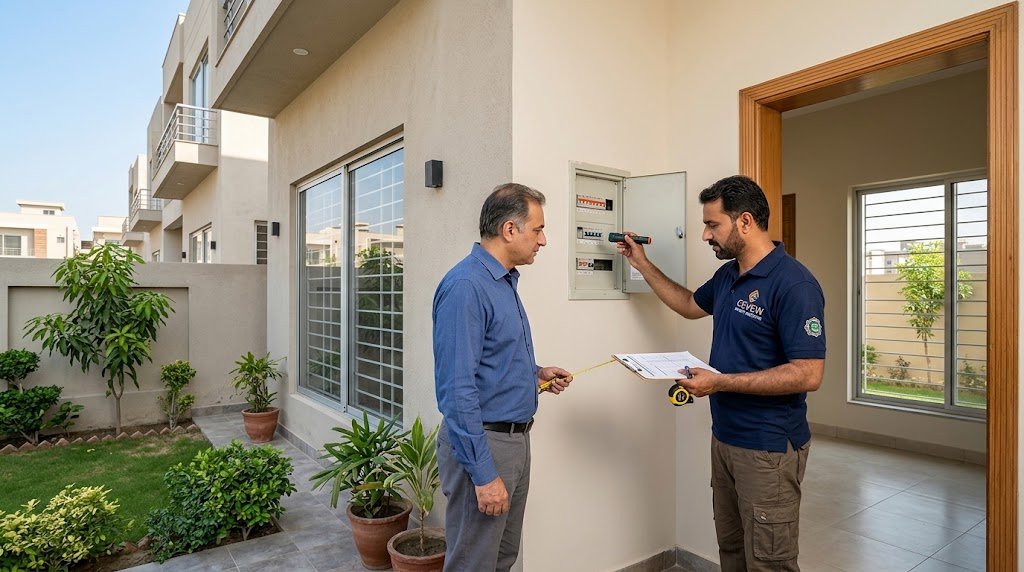
If you have already completed a thorough house inspection, use the findings as part of your negotiation. A cracked wall, old wiring, or water damage is not just an inconvenience — it is a financial cost you will have to bear after purchase.
Handling Counter-Offers
Rarely will a seller accept your first offer. Counter-offers are a normal part of the process. The key is to respond strategically rather than emotionally.
Negotiation is not about who blinks first. It is about who understands value better.
Common Counter-Offer Scenarios
- Seller counters with a small reduction: "I can come down by Rs. 5 lakh." This often means there is more room to negotiate. Respond with a slightly higher counter-offer and wait.
- Seller counters with a meeting in the middle: "Let's split the difference." This can be fair, but check whether the split actually works for your budget.
- Seller refuses to move: "The price is final." This may be genuine, or it may be a test. Ask if the seller is willing to include anything else — furniture, fixtures, or payment flexibility.
- Seller asks for a token amount immediately: This is normal if the deal is moving forward, but never pay a token before document verification (see the section on mistakes below).
Creative Negotiation Levers
Price is not the only thing you can negotiate. Consider these alternatives when the seller refuses to move on price:
- Payment timeline — Offer a faster payment schedule in exchange for a lower price, or ask for a longer payment period in exchange for a higher price.
- Inclusions — Ask for furniture, air conditioners, or kitchen appliances to be included in the sale.
- Repairs — Request specific repairs to be completed before transfer instead of a price reduction.
- Utility transfers — Ask the seller to bear the cost of utility connection transfers.
- Agent commission — Negotiate who pays the agent commission or whether it can be split.
Remember that hidden costs of buying property — transfer fees, stamp duty, and agent commission — can add 5–10% on top of the purchase price. Negotiating on these items can sometimes save you more than negotiating on the base price itself.
What to Say — and What Not to Say — During Negotiation
Your language during negotiation matters. You want to be respectful and factual, not confrontational. Here are practical examples of what works and what backfires.
| Situation | Effective Phrasing | Ineffective Phrasing |
|---|---|---|
| Making an offer | "Based on comparable sales in this block, I believe a fair price is around X. I'm ready to move forward at this figure." | "This price is too high. Nobody will pay that. You need to come down." |
| Responding to rejection | "I understand. Could you help me understand how you arrived at this price? I want to make sure I'm not missing something." | "That's ridiculous. You're overpricing this property." |
| Discussing repairs | "The inspection identified some water damage in the bathroom. I've estimated the repair at Rs. X. Could we adjust the price to account for this?" | "The house has problems. I need a huge discount." |
| Responding to pressure | "I need to complete my document verification before committing financially. I hope you understand. I'll move as quickly as I can." | "Stop pressuring me. I'll decide when I decide." |
| Walking away | "Thank you for your time. My budget is X, and if anything changes on your side, I'd be happy to continue the conversation." | "Forget it. You're impossible to deal with." |
← Scroll horizontally to view the full table →
In Pakistan's property culture, negotiations are often conducted through agents rather than directly between buyer and seller. If you are working with an agent, remember that the agent represents the seller's interest unless you have engaged them independently. Be clear about your budget and limits, and do not share information that weakens your position — such as how urgently you need a house or your absolute maximum budget.
Negotiation Mistakes That Cost Buyers Money
Even smart buyers make negotiation mistakes. Here are the most damaging ones to avoid:
Mistake #1: Revealing Your Maximum Budget
Agents and sellers will often ask, "What is your budget?" If you say "Rs. 2 crore," every property you see will be priced at or above Rs. 2 crore. Keep your true ceiling private. Instead, say something like, "I'm looking in the Rs. 1.7–1.9 crore range depending on the property."
Mistake #2: Falling in Love With a Property
When you become emotionally attached, you lose negotiating power. Sellers and agents can sense this. Always be willing to walk away. If you cannot walk away, you are not negotiating — you are just paying whatever is asked.
Mistake #3: Paying a Token Before Verification
Agents often push for a token amount to "hold" the property while you verify documents. This is normal practice, but it should only happen after you have seen the property and have a clear plan for verification. Paying a token before any document check is risky and can be difficult to recover.
Never pay a token amount before you have at minimum seen the original ownership documents and confirmed the seller's identity. Even then, verify independently with the relevant authority — CDA office, society transfer office, or sub-registrar — before paying large sums.
Mistake #4: Ignoring the Total Cost
Negotiating the base price down by Rs. 10 lakh is meaningless if transfer fees, stamp duty, and agent commission eat up Rs. 15 lakh. Always calculate the total cost of purchase, not just the asking price.
Mistake #5: Being Rude or Dismissive
Sellers are people. If you insult their property or dismiss their price as unrealistic, they are less likely to negotiate in good faith. Stay respectful even when you disagree. A seller who feels respected is more likely to meet you halfway.
Mistake #6: Negotiating Before Verifying Documents
Spending weeks negotiating a price on a property with unclear ownership is wasted effort. Verify the documents first, or at least confirm basic ownership before investing serious negotiation time. If the documents are flawed, no price is a good price.
Mistake #7: Accepting the First Counter-Offer Without Pushing Back
Sellers expect some back-and-forth. If the seller counters at Rs. 1.9 crore and you immediately accept, you may have left money on the table. It is usually acceptable to make one more reasonable counter-offer before finalising.
When Should You Walk Away?
Sometimes the best negotiation move is to walk away. Here are situations where walking away is the right decision:
- The seller refuses to provide documents — No documents, no deal. This is non-negotiable.
- The price exceeds your verified budget — Do not stretch beyond what you can afford. Property purchases have hidden costs that make over-budget purchases dangerous.
- The seller uses aggressive pressure tactics — "You must decide today or I'll sell to someone else." Genuine sellers do not need to use threats.
- You discover problems that change the value — Structural issues, legal disputes, or pending dues that the seller refuses to address.
- Your research shows the property is significantly overpriced — If comparable sales suggest the property is worth 20% less than asking, and the seller refuses to move, walk away. There will be other properties.
The power to walk away is the power to negotiate. If the seller knows you will buy at any price, the price will be any price.
Negotiation Context in Islamabad and Rawalpindi
Every market has its own negotiation culture. Here are a few practical observations about Islamabad and Rawalpindi that can help you negotiate more effectively:
- Islamabad's CDA sectors (F-7, F-10, G-9, I-8, etc.) tend to have less aggressive negotiation because demand often exceeds supply, especially for well-maintained houses. Sellers in premium sectors may hold firm on price.
- Developing sectors like G-13, G-14, and G-15 have more price variation and often more room to negotiate, particularly for older construction or properties without all amenities.
- Private housing societies like Bahria Town and DHA have their own transfer procedures and fee structures. Society transfer fees are usually non-negotiable, but the base price may have some flexibility depending on the seller's urgency.
- Rawalpindi's older areas, such as Saddar or Satellite Town, often have properties that have been in the same family for generations. Sellers may have emotional attachments, making negotiation slower.
- Peripheral areas on Chakri Road or Adiala Road may have more negotiable prices due to lower demand or developing infrastructure.
If you are comparing areas, use the Islamabad area guides and Rawalpindi area guides on Cevew Property to understand market conditions before you start negotiating.
Pre-Negotiation Checklist
Before you make your first offer, run through this checklist:
Negotiation Preparation Checklist
- Researched at least 3–5 comparable sales in the same area
- Visited the property in person and completed a house inspection
- Checked how long the property has been on the market
- Identified the seller's likely motivation (urgent, testing, emotional, investor)
- Calculated the total cost including transfer fees, stamp duty, and agent commission
- Set your maximum walk-away price in writing
- Prepared a list of comparable sales to justify your offer
- Confirmed you have the financial capacity to complete the purchase
- Decided on alternative negotiation levers (payment timeline, inclusions, repairs)
- Mentally prepared to walk away if the deal does not work
Key Takeaways
- Research before you offer — Comparable sales, market conditions, and time on the market are your strongest negotiation tools.
- Understand the seller — Urgent sellers have more room to negotiate. Emotional sellers may not budge.
- Make a confident, justified opening offer — 5–15% below asking depending on market conditions, supported by facts.
- Never reveal your maximum budget — Keep your true ceiling private.
- Never pay a token before document verification — Verify ownership independently first.
- Know your walk-away number — And stick to it. A property is only a good deal if it fits your budget.
- Use non-price levers — Payment terms, inclusions, and repairs can be negotiated when price is stuck.
Frequently Asked Questions
How much below asking price should I offer on a property in Islamabad?
In most cases, starting 5–8% below the asking price is reasonable in a balanced market. In a buyer's market with excess supply, you can start 8–12% below. In a seller's market with limited listings, 3–5% below is more realistic. Always support your offer with comparable sales and market data.
What is the best way to make a low offer without insulting the seller?
Present your offer with reasoning. Say something like: "Based on comparable sales in this block, I believe a fair price is around X. Here are the properties I compared, and here is why I think this is a fair valuation." Facts are harder to dismiss than opinions. Always remain respectful and indicate willingness to negotiate.
Can I negotiate the price of a property in Bahria Town or DHA?
Yes, the base price is negotiable in most cases, but society transfer fees and dues are usually fixed and non-negotiable. Focus your negotiation on the base price, inclusions, or payment timeline. Remember that society transfer offices have their own procedures — verify everything independently before committing.
What should I do if the seller refuses to negotiate at all?
First, check whether the property is genuinely worth the asking price by comparing recent sales. If it is overpriced, walk away — there are always other properties. If it is fairly priced and fits your budget, consider whether the property's other benefits (location, condition, future potential) justify accepting the price.
Is it better to negotiate directly with the seller or through an agent?
Most negotiations in Pakistan go through agents, especially if the agent introduced you to the property. However, if you have direct access to the seller, negotiating directly can remove the agent's commission from the conversation. Be aware that cutting out the agent may have ethical implications if they introduced you — clarify the relationship before bypassing them.
What is a token amount, and how much should I pay?
A token amount (also called biana) is a small payment made to hold a property while you complete due diligence. It is normally 1–2% of the property value, though this varies. Always confirm in writing what happens if the deal does not complete — whether the token is refundable and under what conditions — before paying any amount.
How do I negotiate when I've already fallen in love with a property?
This is a dangerous position. Take a step back and approach the negotiation objectively. Set your walk-away number before you make an offer, and do not exceed it. If you cannot imagine losing the property, ask a friend or family member to act as a rational sounding board. Emotional buying almost always leads to overpaying.
Ready to Start Negotiating?
Now that you understand how to research, make offers, and negotiate effectively, the next step is to find properties in your budget and preferred areas. Browse current listings across Islamabad and Rawalpindi.
Browse Properties for Sale