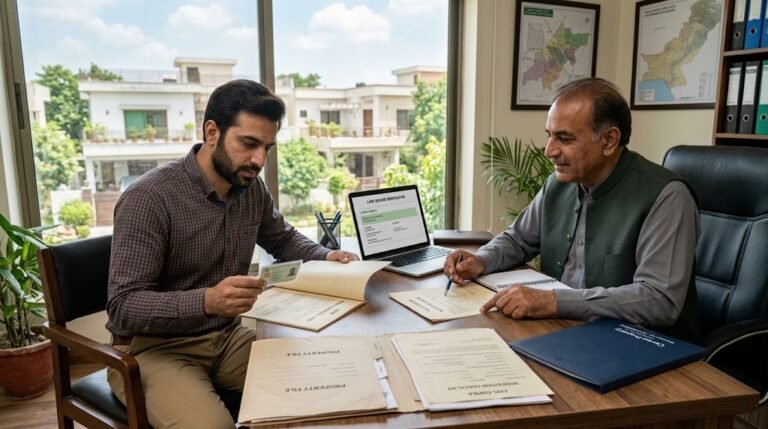
What Is a Property Token and What Should You Check Before Paying One?
If you have ever negotiated a property in Pakistan, you have probably heard the word "token" within the first few minutes. A dealer says the seller is asking for a token. A friend advises you to pay a token to block the deal. A relative warns you not to pay a token until you have checked the papers.
Everyone uses the word differently, and that is exactly why it causes so many misunderstandings. Learning what is a property token — and what it does and does not mean — helps you avoid a problem that is far more common than outright fraud: paying money without a clear written understanding of what that money represents.
What Is a Property Token?
A property token is a payment made by a prospective buyer to show serious intent toward a proposed property transaction. Depending on the agreed terms, it may be used to temporarily reserve a property for a short period, or simply to move negotiations forward so that both sides can prepare documents and finalise the details.
It is important to understand what a token is not:
A token payment does not by itself prove ownership. It does not automatically transfer the property into your name. It does not automatically give you possession. And it does not automatically guarantee that the seller will complete the transaction.
What a token does do is create a commercial understanding between the two sides. The buyer signals that they are serious. The seller signals that they will hold the property for a short, agreed period while the next steps are completed. Whether that understanding is legally enforceable depends almost entirely on what was written down.
A property token is a serious-intent payment in a proposed property transaction. It may reserve a property for an agreed period, or it may simply move negotiations to the next stage. It is not proof of ownership, and it is not automatically refundable or non-refundable in every transaction. The exact meaning, the refund conditions, and the legal effect all depend on the written agreement and applicable law — so before paying any token, confirm in writing what it represents, what it reserves, for how long, and under what conditions it will be returned or adjusted.
Why Do Buyers Pay a Property Token?
Buyers pay a token for a range of practical reasons. In most cases, it is not about legal ownership — it is about time and priority.
Common Reasons for a Token Payment
- Showing serious buying interest
- Moving negotiations to the next stage
- Temporarily holding a property for an agreed period
- Starting the transaction process formally
- Giving both parties time to prepare documents
- Preventing the seller from showing the property to others
- Arranging the buyer's own financing or funds
A token is also used when the buyer wants time to complete basic checks — verifying the seller's identity, reviewing ownership records, or visiting the property again — without the risk of losing it to another buyer in the meantime.
What the token does not do is guarantee that the property will be transferred to you. That depends on the documents, the seller, the authority or society involved, and the rest of the transaction.
Is a Property Token the Same as Bayana?
Not exactly — but the two words are often used interchangeably in everyday property conversations, which is where confusion begins.
In general terms, a token is a smaller payment that signals intent and may reserve the property for a short time. Bayana (also called earnest money) is usually a larger, more formal part-payment that signals a firmer commitment to buy at an agreed price. An advance payment is a payment made against the total price, and the final payment is the amount paid at the point of transfer or completion.
| Term | Typical Meaning |
|---|---|
| Property Token | A smaller payment showing serious intent; may reserve the property briefly. |
| Bayana / Earnest Money | A more formal part-payment confirming commitment to buy at an agreed price. |
| Advance Payment | A payment against the total agreed price, before final transfer. |
| Final Payment | The amount paid at completion, usually alongside the transfer. |
That said, practice varies. Some sellers and dealers use "token" to mean bayana, and some use "bayana" to describe what is really a small reservation payment. The actual legal and financial meaning depends on the agreement and the transaction structure, not on the label alone.
Does Paying a Property Token Make You the Owner?
No. Paying a token does not by itself mean that you have become the legal owner of the property.
Ownership and transfer depend on the relevant transaction documents, the records held by the authority or society, the correct transfer process, and the applicable procedures for that specific property. A token payment is only one step — and it is usually a very early one.
To avoid confusion, keep these stages separate in your mind:
Stages That Are Not the Same
- Payment — money transferred between parties
- Booking — an early expression of intent
- Agreement — terms accepted in writing
- Possession — physical handover of the property
- Transfer — the documented change of ownership in records
- Ownership — legal recognition in the relevant records
A buyer pays a token for a house and receives the keys the same week. They assume this makes them the owner. Later, they discover that the property is still recorded in the seller's name, that a transfer has not been completed, and that the seller is now unwilling to proceed. The buyer has possession but not ownership — and without written terms, their position is much weaker than they expected.
Why the Written Terms Matter More Than the Amount
Many buyers focus on how much to pay as a token. That matters, but it is not the most important thing. What matters far more is what the token is for and what happens if the transaction does not complete.
A modest token paid with a clear written receipt is far safer than a large token paid on a verbal understanding. The receipt does not have to be complicated — it simply needs to record the basics clearly.
Before paying, ask these questions:
Questions to Ask Before Paying a Token
- How much is being paid?
- Why is it being paid?
- What does the payment reserve or confirm?
- For how long is the property held?
- What happens next?
- Under what conditions can it be returned?
- Under what conditions can it be adjusted against the price?
- What happens if documents cannot be verified?
What Should You Check Before Paying a Property Token?
A token is usually small, but it is the first point at which money leaves your hands. Treat it as a signal to start proper due diligence — not as a shortcut that lets you skip it.
Pre-Token Verification Checklist
- Property ownership
- Seller identity
- Ownership documents
- Transfer status
- Property location
- Property size and description
- Possession status
- Outstanding dues
- Utility status
- Society or development authority records
- Applicable approvals
- Existing disputes
- Mortgage or financing claims where applicable
- Restrictions affecting transfer
- Parking or included rights where applicable
The exact verification process depends on the type of property, its location, and the authority or society involved. A flat in a managed building is checked differently from a plot in a developing housing society, and both differ from a house on an established street.
Verify the Seller Before Paying
The person receiving your money should be the person entitled to receive it. This sounds obvious, but in practice it is not always straightforward — especially in transactions involving multiple owners, family members, or representatives.
Seller Verification Points
- Full legal name of the seller
- CNIC or applicable identification
- Relationship to the property
- Ownership documents in the seller's name
- Authority to sell
- Multiple-owner situations
- Inheritance situations
- Power of attorney arrangements
If an agent or representative is receiving the money, clarify four things before paying:
Who owns the property? — The legal owner, not just the person negotiating.
Who is receiving the money? — The seller directly, or an agent or representative acting on their behalf.
Under what authority? — What written authority does the person have to receive the token?
What receipt will be provided? — Who signs it, and what does it commit them to?
If you are buying through a dealer or agent, the underlying property documents still matter. A dealer may coordinate the deal, but the buyer should always understand who owns the property and who has authority to sell.
Verify Property Ownership and Documents
Ownership should be checked through the appropriate records — not through verbal statements. The documents that matter vary by property type and the authority or society involved, so treat any list as a starting point rather than a universal checklist.
Records That May Be Relevant
- Title-related documents
- Allotment documents
- Transfer records
- Possession documents
- Society records
- Development authority records
- Seller identification documents
- Power of attorney where applicable
- Inheritance-related documents where applicable
- Any prior sale or transfer history
No single document proves ownership in every Pakistani property transaction. The correct set of records depends on the property, the area, and the authority or society that governs it. For significant transactions, having a qualified legal or property professional review the documents is a practical step rather than an unnecessary one.
Check for Outstanding Property Dues
Unpaid dues are one of the most common surprises in property purchases. They do not usually appear in the advertised price, and they can become a point of dispute once the transaction is underway.
Dues to Clarify
- Society charges
- Maintenance dues
- Utility bills
- Property-related payments
- Building charges
- Other applicable outstanding amounts
Ask the seller directly, and then confirm the position where possible with the society, building management, or the relevant authority. Request written confirmation if it is available. The important point is not just whether dues exist — it is who is responsible for settling them before the transaction moves forward.
Do not assume that the buyer automatically becomes responsible for previous dues, and do not assume the seller automatically clears them either. The outcome depends on the applicable rules and the agreement between the parties. Clarify this in writing before payment.
Check for Legal or Ownership Disputes
Some property problems do not appear on the surface. A property may look normal and be occupied normally, while a dispute over ownership, inheritance, or repayment is quietly running in the background.
Issues Worth Investigating
- Ownership disputes
- Inheritance disputes
- Pending court cases
- Mortgage claims
- Transfer restrictions
- Power-of-attorney complications
- Competing ownership claims
If there is any indication of a dispute, or if the ownership history is complicated, it is sensible to involve a qualified lawyer before paying anything. Identifying a dispute before payment is far easier than resolving one after.
Confirm the Property's Possession Status
Possession generally means physical control of the property — you have the keys and can use the unit. It is not the same as ownership, and it is not the same as transfer.
Possession status matters because it affects when you can actually use the property, and because a property can be at different stages at the time of sale:
Stages to Confirm
- Booking — an early intent stage
- Allotment — formal assignment by a project or society
- Possession — physical handover
- Transfer — documented change of ownership
- Ownership — legal recognition in records
These terms are not interchangeable. Confirm exactly which stage the property is at, and which stage you will be at after the transaction completes.
Confirm the Property Price Before Paying
A token should always be connected to a clearly agreed transaction. If the price is still vague, the token has nothing solid to attach to.
Price Details to Confirm in Writing
- Total agreed price
- Token amount
- Remaining amount
- Payment schedule
- Payment method
- Expected transfer stage
- Any agreed adjustments
- Any additional charges
Relying only on verbal conversations is risky. If a seller is unwilling to put the price and payment schedule in writing, that is worth understanding before any money changes hands.
Understand What Happens to the Token Money
This is one of the most important parts of the transaction, and one of the most frequently overlooked.
Buyers often assume a token is refundable. Sellers often assume it is not. Neither assumption is universally correct. The outcome depends on the written terms and the applicable law.
Refund and Adjustment Points to Clarify
- When the token is refundable
- When it may be adjusted against the price
- When it may be forfeited
- What happens if documents cannot be verified
- What happens if the seller cannot complete the transaction
- What happens if the buyer does not proceed
- What happens if the agreed deadline expires
Do not assume that a specific refund or forfeiture rule automatically applies to every property transaction. Whether money is returned, adjusted, or forfeited depends on the written agreement and applicable law. Where the amount is significant or the terms are unclear, seek professional legal advice before paying.
Always Get a Proper Property Token Receipt
A signed receipt is the simplest form of protection for both sides. It does not need to be a complex legal document — but it should record the essentials clearly.
What a Token Receipt Should Record
- Buyer name
- Seller name
- Property description
- Property location
- Property identification details
- Total agreed price
- Token amount
- Date of payment
- Payment method
- Purpose of the payment
- Terms agreed by both parties
- Refund or adjustment conditions
- Signatures of both parties
- Relevant identification details
- Witness information where appropriate
The exact contents should reflect the actual transaction and the applicable requirements for that property and area. A receipt is not a universal legal template, and it does not replace professional verification of the underlying documents.
Keep a Clear Record of the Token Payment
Documentation matters as much as the payment itself. A well-documented token protects you if the transaction later becomes disputed.
Records to Keep
- Bank transfer records
- Payment receipts
- Signed acknowledgements
- Written agreements
- Copies of relevant documents
- Written communication records
Payment methods differ in how traceable they are, and different situations may suit different methods. The key point is traceability and documentation — not which method is used. Keep copies of everything, and store them somewhere you can access if needed.
Visit and Inspect the Property Before Paying
A token should never be paid for a property you have not physically seen. Photographs and videos can be useful for shortlisting, but they cannot replace an in-person inspection.
Physical Inspection Checklist
- Location and access
- Walls for cracks and dampness
- Ceilings for stains and seepage
- Floors for unevenness
- Doors and windows
- Bathrooms and drainage
- Kitchen condition
- Water supply and pressure
- Drainage and sewerage
- Electricity fittings
- Natural light
- Ventilation
- Parking arrangements
- Common areas
- Overall building condition
For a more detailed room-by-room approach, our guide on how to inspect a property before buying walks through what to look at and what to photograph. For apartments, the same principles apply — with extra attention to shared building systems, lifts, common areas, and maintenance arrangements.
Check the Building, Project, or Housing Society
A property does not exist in isolation. It sits inside a building, a project, or a housing society — and the rules, records, and status of that larger entity affect your purchase.
Building, Project, and Society Checks
- Project or building status
- Relevant authority records
- Society records
- Applicable approvals
- Transfer procedure
- Maintenance arrangements
- Utility arrangements
- Parking arrangements
- Common areas
- Possession status
Requirements vary between apartments, houses, plots, private projects, and housing societies. Confirm the position for your specific property with the relevant authority or management — rather than assuming that one society's process applies to another.
Questions to Ask Before Paying a Property Token
These questions cover most of what you need to know. Ask them early, and where the answers matter, get them in writing.
Key Questions for the Seller
- Who is the legal owner?
- Can I verify the ownership documents?
- What exactly does this token payment represent?
- Is the token refundable?
- Under what conditions is it refundable?
- What happens if the seller cannot complete the transaction?
- What happens if I do not proceed?
- What is the total property price?
- How much remains after the token?
- What documents will be signed?
- When will transfer take place?
- Is possession available?
- Are there any outstanding dues?
- Is there any mortgage or dispute?
- Who will receive the token?
- Will I receive a signed receipt?
Property Token Red Flags Buyers Should Watch For
Not every warning sign means something is wrong. But a cluster of them — or even one that is not explained clearly — is a signal to slow down and verify.
A red flag does not automatically prove wrongdoing. But unresolved issues should be investigated before any payment — not after.
How to Pay a Property Token More Carefully
A safer token payment follows a clear sequence. Each step is simple on its own; together they reduce the risk of a misunderstanding.
Shortlist the Property
Decide on the specific property you are seriously interested in. Do not pay a token for something you have only seen online or heard about second-hand.
Visit and Inspect It
Walk through the property in person. Check the condition of the unit, the building, common areas, and the surrounding location. Photograph anything that concerns you.
Identify and Verify the Seller
Confirm who legally owns the property and who has authority to sell it. If a representative is involved, understand their authority in writing.
Review Ownership and Relevant Documents
Check the ownership records and the relevant documents through the appropriate authority or society. Involve a qualified professional for complex cases.
Check Dues, Possession, Transfer, and Property Status
Confirm outstanding dues, possession status, the transfer process, and the current status of the property. Clarify who is responsible for what.
Agree on Price and Token Terms in Writing
Put the total price, token amount, remaining payment, refund conditions, and deadlines in writing before any money changes hands.
Make the Payment Through a Documented Method
Use a payment method that leaves a clear record. Get a signed receipt that matches the written terms you agreed.
Keep the Signed Receipt and Records
Store copies of the receipt, payment record, written terms, and any relevant documents. These become important if the transaction later needs to be clarified.
What Should You Check Before Paying a Token for a Flat or Apartment?
Apartments come with a specific set of considerations that differ from plots or standalone houses. The unit is only one part of what you are buying — the building and its management arrangements matter just as much.
Apartment-Specific Checks
- Apartment number and floor
- Covered area and layout
- Parking arrangements
- Building management setup
- Maintenance charges
- Utility meter arrangements
- Possession status
- Transfer process
- Common areas and condition
- Lift condition and maintenance
- Water supply and pressure
- Electricity and backup power
- Building or project status
One of the most important questions for an apartment is what exactly is included in the agreed price. Parking, storage, and sometimes even fittings are not always part of the deal. Confirm this in writing before paying a token.
If you are looking for an apartment, it also helps to browse available listings on our properties page so you can compare realistic options in your target area.
Does the Token Process Differ for Houses and Plots?
The basic due-diligence principle — verify before you pay — is the same for every property type. But the specific checks differ, because the documents, records, and approval processes are different.
For Houses
House-Specific Checks
- Ownership records
- Construction quality and condition
- Land record
- Utility connections
- Outstanding dues
- Possession status
- Transfer process
For Plots
Plot-Specific Checks
- Plot number
- Block or sector
- Size and dimensions
- Allotment documents
- Possession status
- Transferability
- Development status
- Society or authority records
- Outstanding dues
Not every housing society follows identical procedures. The requirements can vary by society, development authority, and project. Confirm the specifics for your property rather than assuming they match another society's process.
What If a Property Dealer Is Handling the Transaction?
A property dealer can play a useful role — coordinating viewings, communicating between buyer and seller, and helping move the transaction forward. That does not change the buyer's responsibility to understand the underlying property and documents.
Before paying a token through a dealer, clarify:
Dealer-Related Questions
- Who owns the property?
- Who is authorised to sell?
- Who receives the token?
- What receipt is issued?
- What is the dealer's role in the transaction?
- Are the terms written down?
- Who signs the agreement?
A dealer who is transparent about these points is easier to work with than one who is not. If the underlying documents are not shared, or the terms remain verbal, that is worth pausing over.
Helpful Property Resources from Cevew Property
Cevew Property is a property platform focused on listings and real-estate information for Islamabad and Rawalpindi, covering houses, flats, apartments, plots, and rental properties.
If you are at the research stage, it helps to combine practical guidance with real listings. You can start on the Cevew Property homepage, or read more property buying guides covering buying, selling, renting, and documentation topics.
Frequently Asked Questions
What is a property token?
A property token is a payment made by a prospective buyer to show serious intent toward a proposed property transaction. Depending on the agreed terms, it may reserve the property for a short period or simply move negotiations forward. It is not proof of ownership, and its meaning depends on the written agreement.
Does paying a property token make me the owner?
No. Paying a token does not by itself establish legal ownership. Ownership and transfer depend on the relevant transaction documents, the records held by the authority or society, and the correct transfer process. A token is usually an early step, not a transfer of ownership.
Is a property token refundable?
It depends on the written transaction terms and applicable law. Some tokens are refundable under specified conditions, some are adjusted against the price, and some may be forfeited if the buyer does not proceed. Do not assume a universal rule — clarify the conditions in writing before paying.
What should I check before paying a property token?
Check ownership, seller identity, relevant documents, outstanding dues, possession status, the property's overall status, the agreed written terms, and the payment record requirements. The exact checks vary by property type and location.
What should be written on a property token receipt?
A receipt should record the buyer and seller names, the property description and location, the total agreed price, the token amount, the date and payment method, the purpose of the payment, the agreed terms, the refund or adjustment conditions, and the signatures of both parties. The exact contents should reflect the actual transaction.
Should I inspect the property before paying a token?
Yes. A physical inspection is important. Photographs and videos cannot show dampness, water leakage, drainage problems, structural issues, or the condition of common areas. For a detailed approach, see our guide on how to inspect a property before buying.
Can I pay a property token directly to a property dealer?
A dealer may receive a token if that is the agreed arrangement, but the buyer should understand the dealer's role and their authority to receive money. Confirm who the legal owner is, who has authority to sell, what receipt will be issued, and who signs the agreement. Always obtain proper documentation.
What happens if the seller refuses to show property documents?
If a seller refuses to show the documents that support ownership and the transaction, it is sensible to pause. Verbal assurances are not verification. Without document checks, you cannot confirm ownership, dues, or transferability — all of which affect the safety of the purchase.
What happens if I change my mind after paying a token?
The outcome depends on the agreed written terms and applicable law. If the receipt or agreement sets out refund conditions, those conditions apply. If there are no written terms, the position is unclear and may depend on the seller's willingness. This is why written terms matter before paying.
Is token money the same as bayana?
Not exactly. A token is generally a smaller payment showing serious intent, while bayana is usually a larger, more formal part-payment confirming commitment. However, people use these terms differently in practice, so the actual meaning should be understood according to the agreement and the transaction structure — not the label alone.
Should I consult a lawyer before paying a property token?
Professional legal or document verification is particularly useful for significant transactions, unclear ownership, multiple owners, inheritance matters, power-of-attorney arrangements, or any property with a complicated history. A lawyer cannot guarantee a risk-free purchase, but can help identify issues a buyer might miss.
Property Token Checklist Before You Pay
Use this checklist as a final review before transferring any token money.
Pre-Payment Checklist
- Property physically inspected
- Seller identity checked
- Ownership verified
- Relevant documents reviewed
- Property details confirmed
- Project or society status checked
- Possession confirmed
- Outstanding dues checked
- Transfer process understood
- Total price confirmed
- Token amount confirmed
- Refund and forfeiture terms understood
- Written receipt prepared
- Payment method documented
- Copies of relevant records retained
- Professional verification obtained where necessary
Looking for a Property to Buy in Islamabad or Rawalpindi?
Explore available property listings through Cevew Property and take the time to verify important property details before making a purchase decision.
Have More Questions About Property Buying?
Explore Cevew Property's property FAQs and educational articles for additional general information on buying, selling, renting, and documentation.
About the Author

Ahmad Ali
Ahmad Ali is a web developer, SEO specialist, and content creator associated with Cevew Property. He writes practical property and real-estate guides designed to help buyers, sellers, landlords, tenants, and property professionals understand important steps before making property decisions.